Lyon, France is one of the largest cities in France is located at the confluence of River Saône and River Rhône. The city is filled with rich history of urban development and cultural production. Lyon is where Auguste and Louis Lumière discovered cinematograph. Although Paris is known as City of Lights, Festival of Lights (Fête des Lumières) is hosted annually at the end of the year to express gratitude to Mary, mother of Jesus. With extensive history in the city development, the French government showcased successful protection and restoration of historical sites with new development and design to emphasize that the past, present, and future of a city can be integrated together with proper planning and cooperation of all disciplines involved in urban evolution. As a result, Lyon was designated as a UNESCO World Heritage Site – becoming an example of continuous urban fabric.
1. Confluence
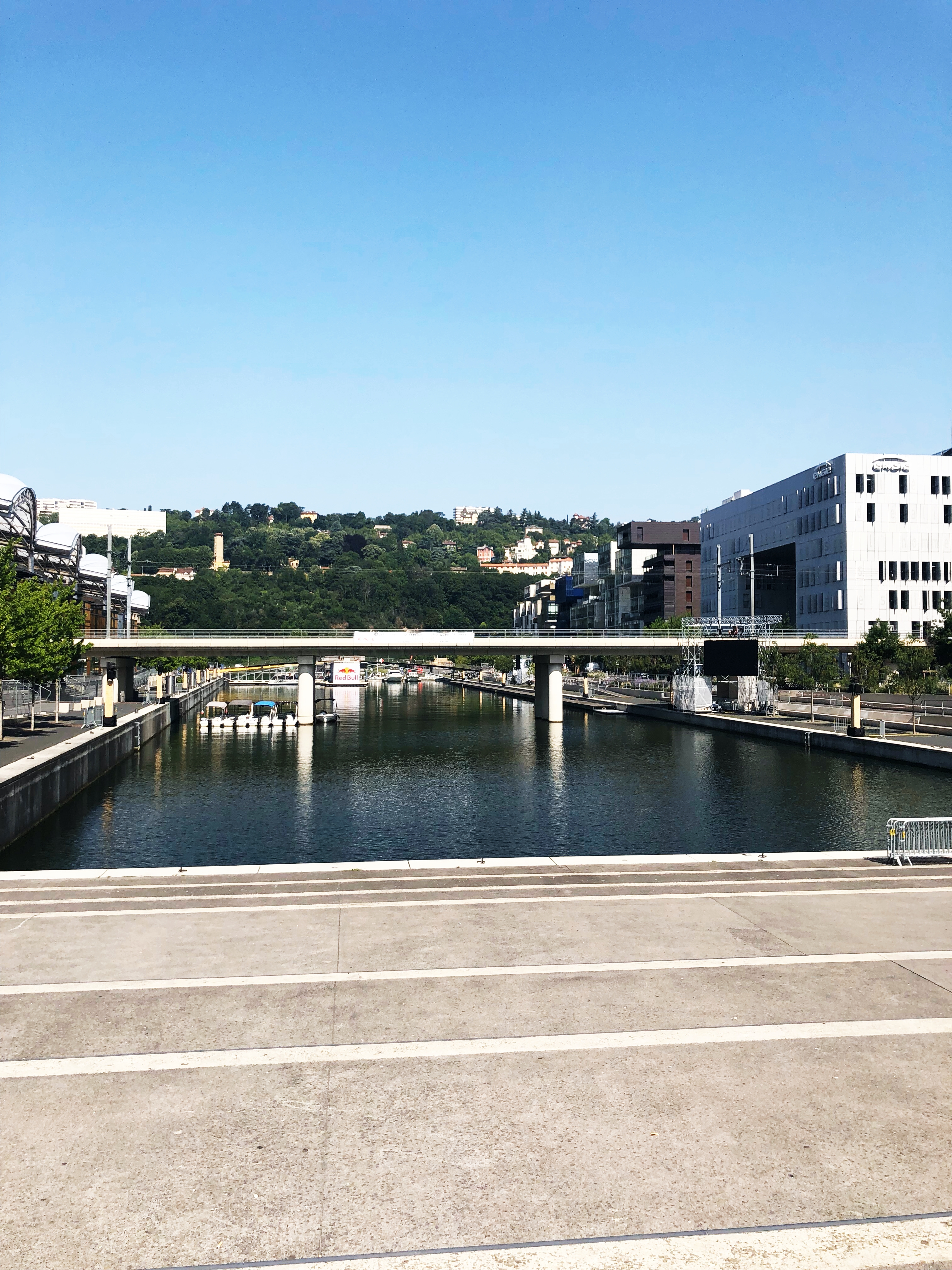
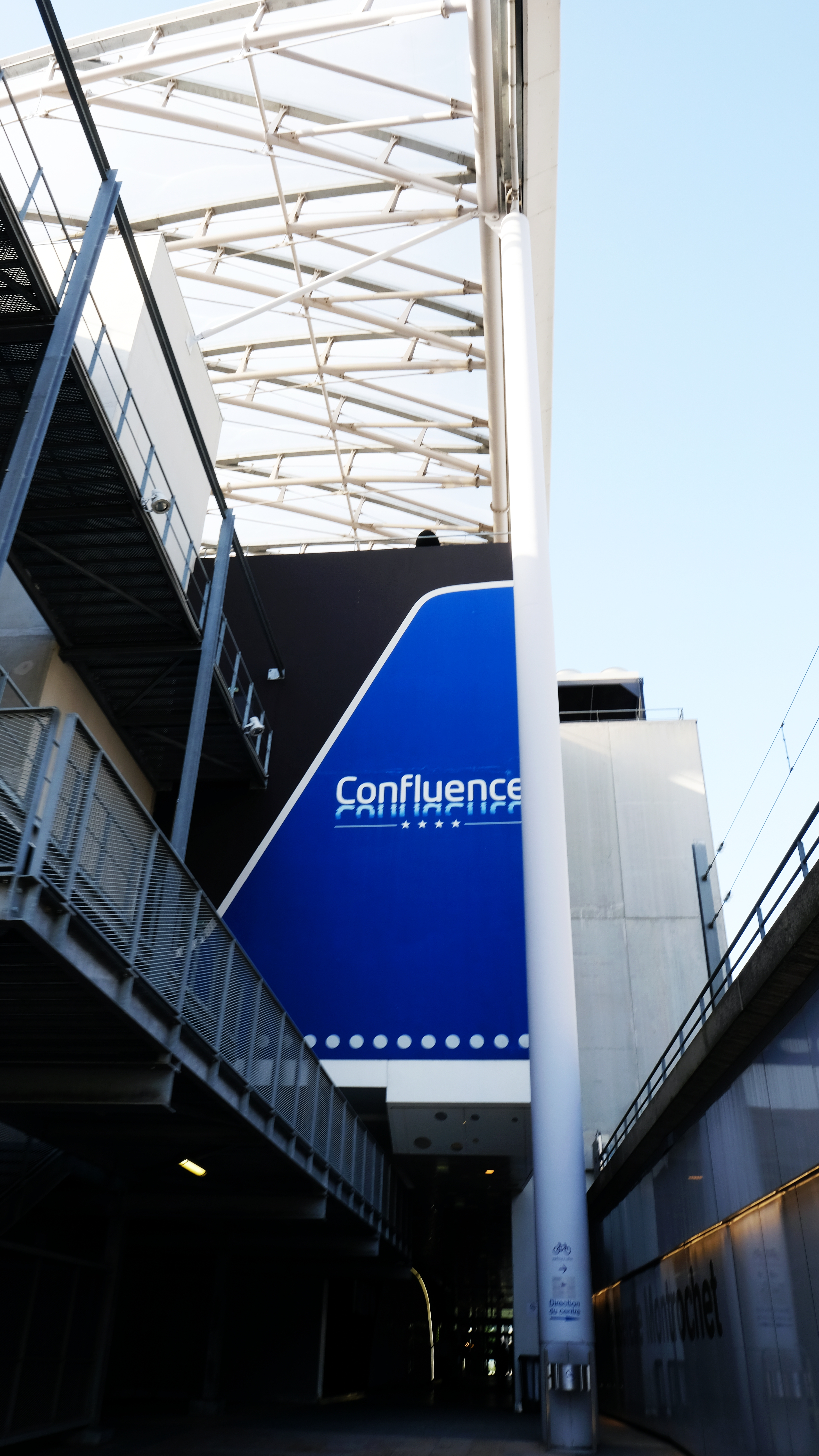
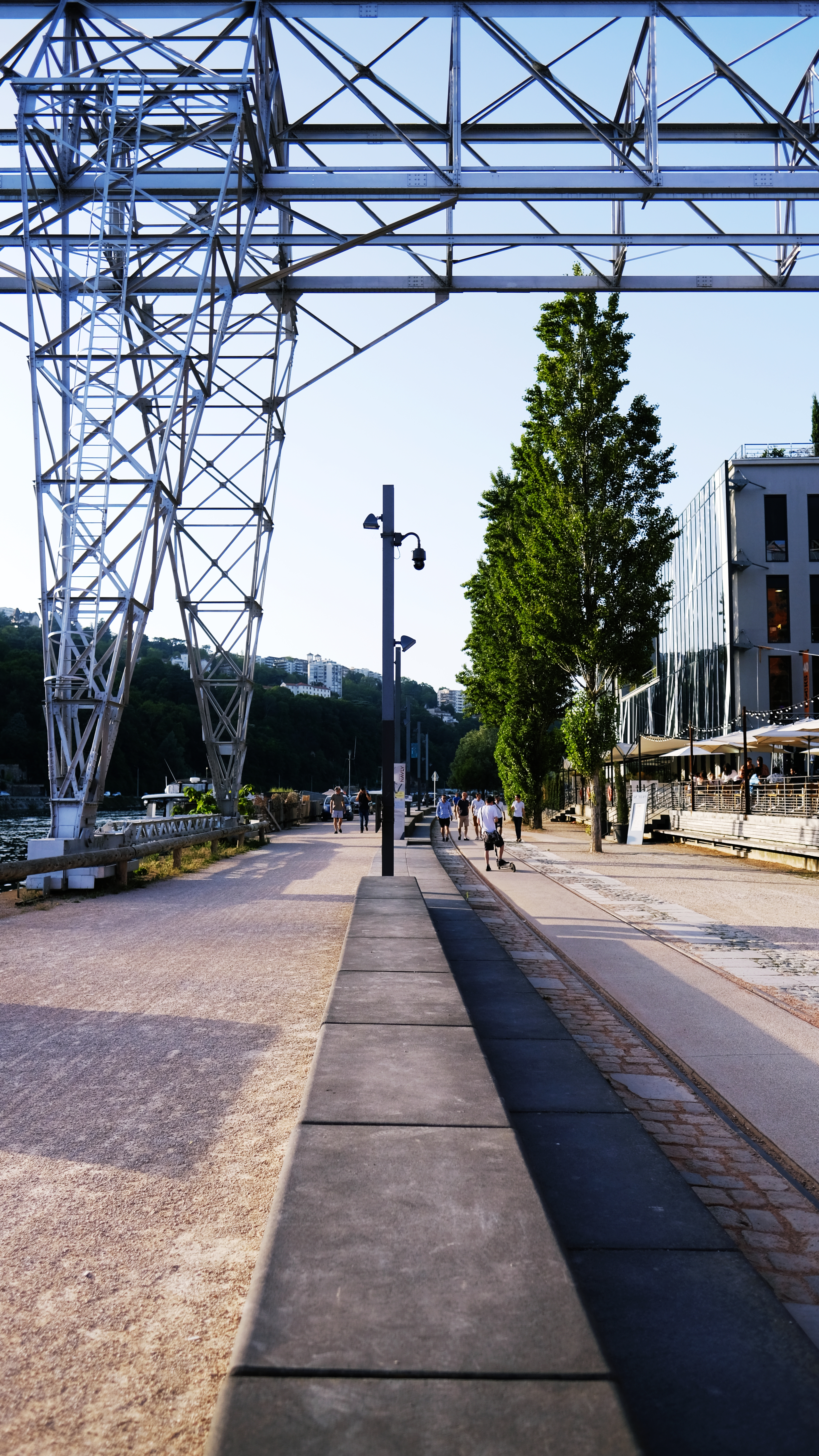
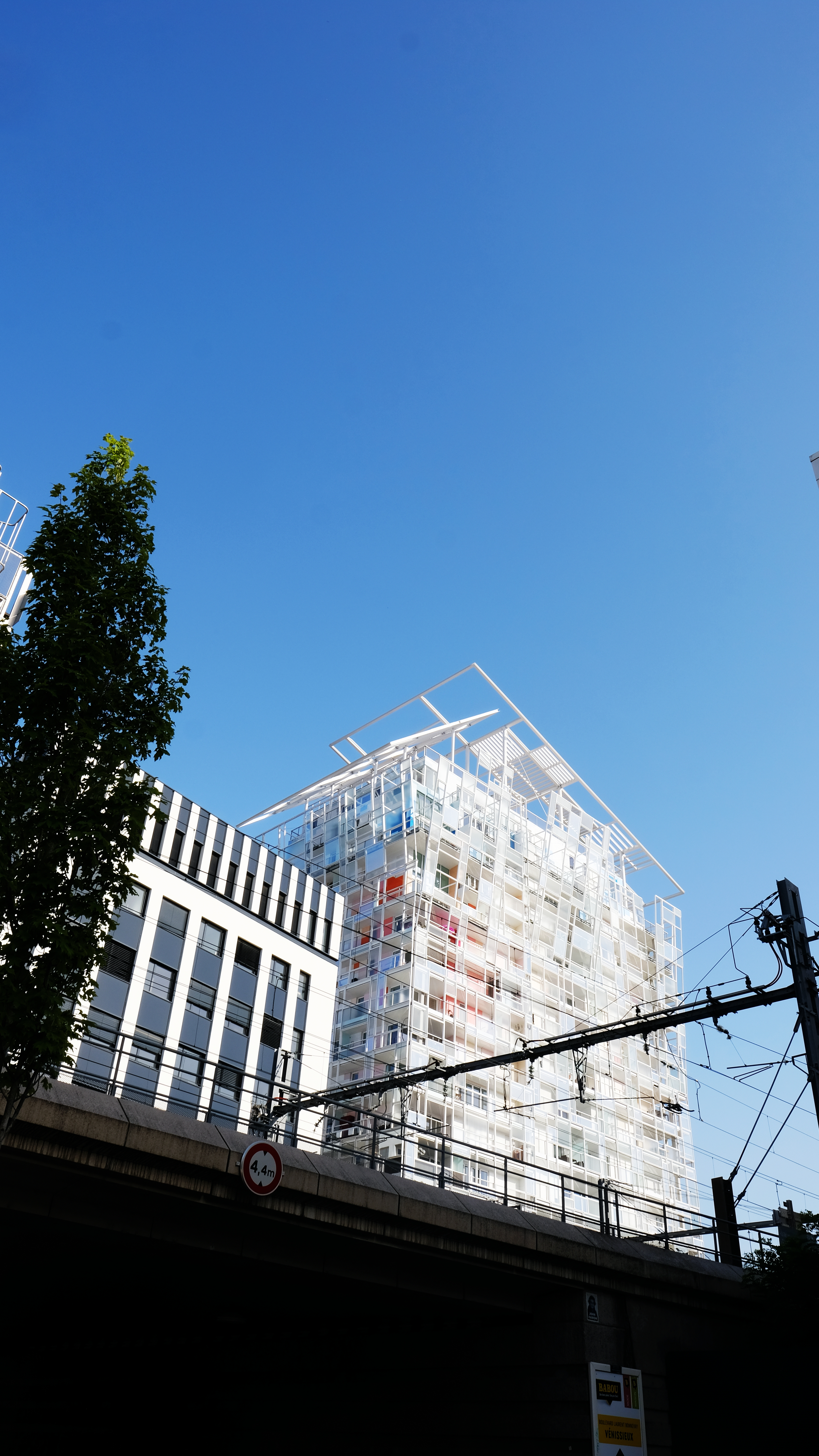
During my visit to Lyon, I stayed at the trendy Mob Hotel which is located at the southern tip of the Confluence neighborhood. Confluence is where the Rhone and Seine rivers meet; therefore, the district was considered the industrial district, housing the wholesale markets, factories, and prisons. Today, with the trends of adaptive reuse design, urbanization along the waterfront, and ecological studies, the district now houses many projects by famous star architects from Coop Himmelblau to MVRDV to Massimiliano Fuksas, transforming the neighborhood into a symbol that represents both the past and the future.
Hotel: Mob Hotel lyon
Location: 55 Quai Rambaud, 69002 Lyon
Musée des Confluences
Architect: Coop Himmelblau
Location: 86 Quai Perrache, 69002 Lyon
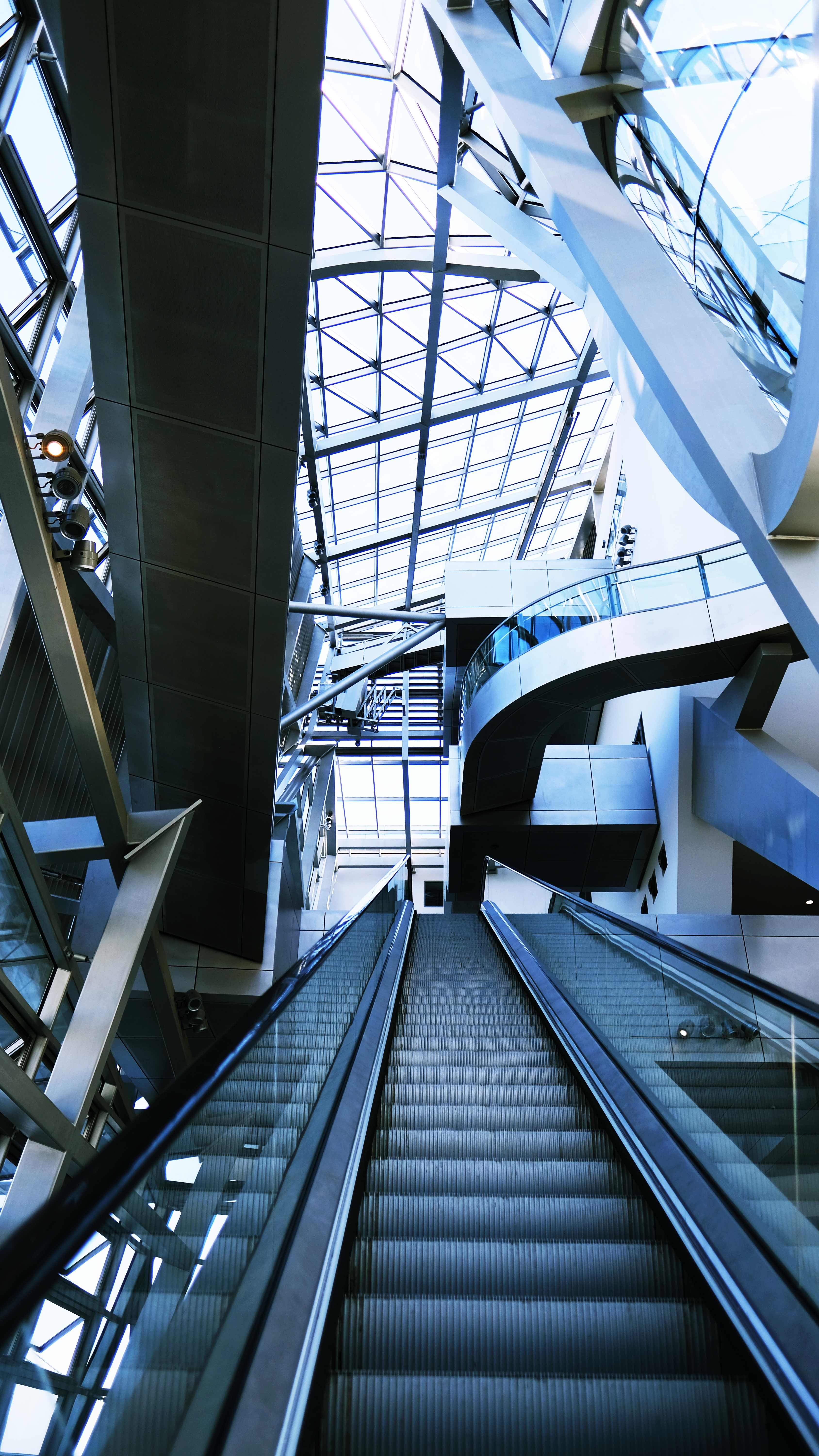
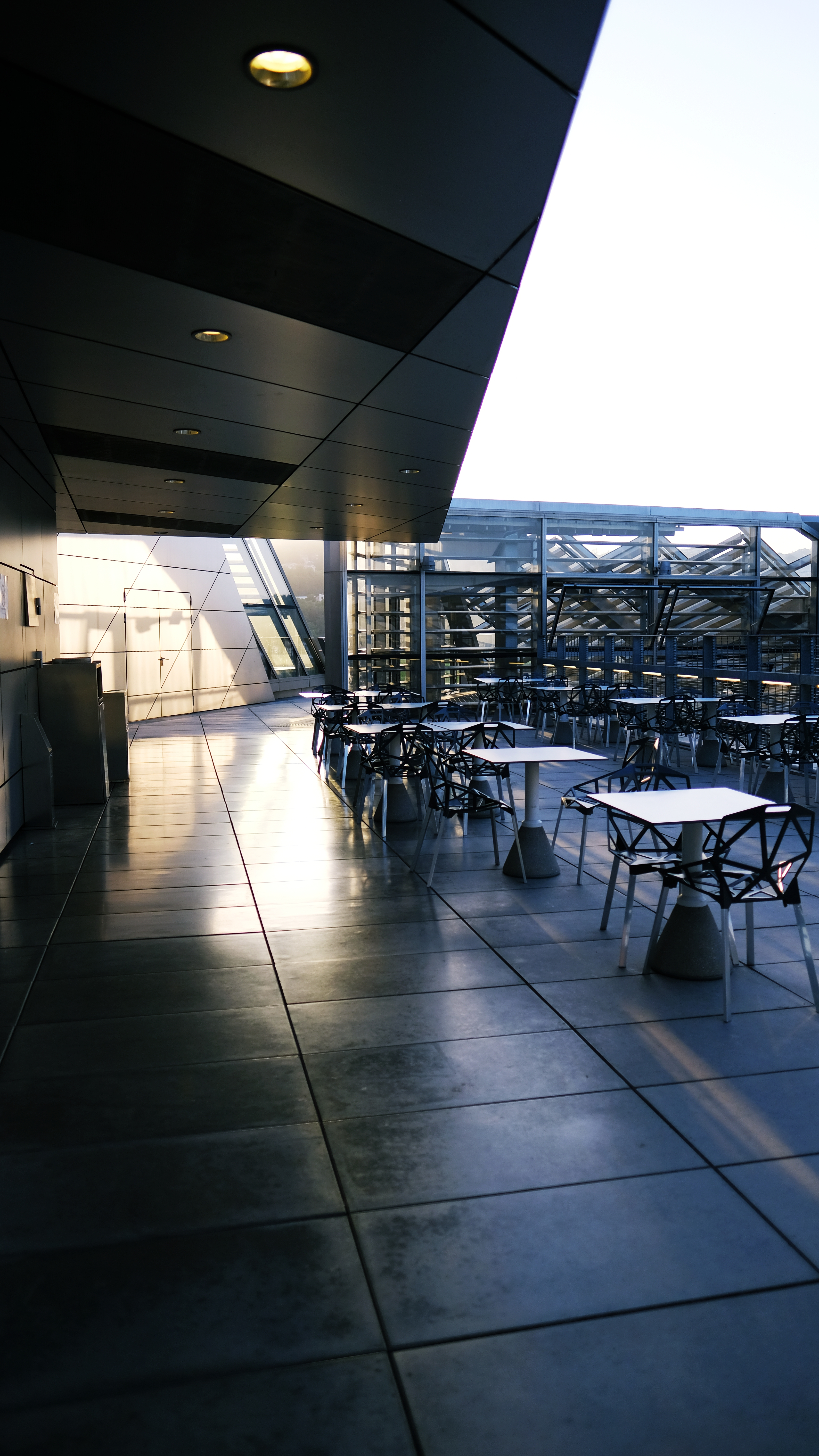
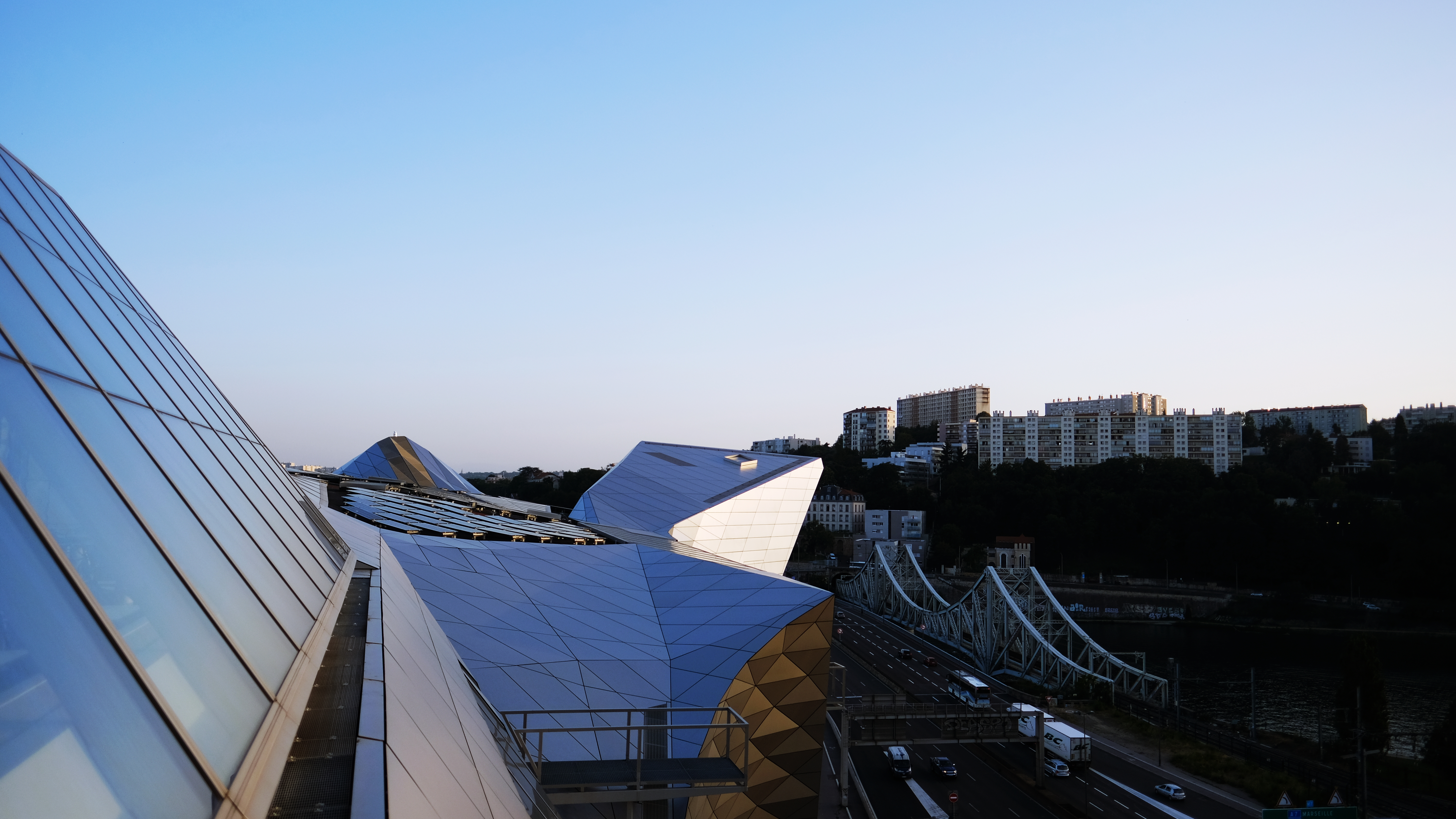
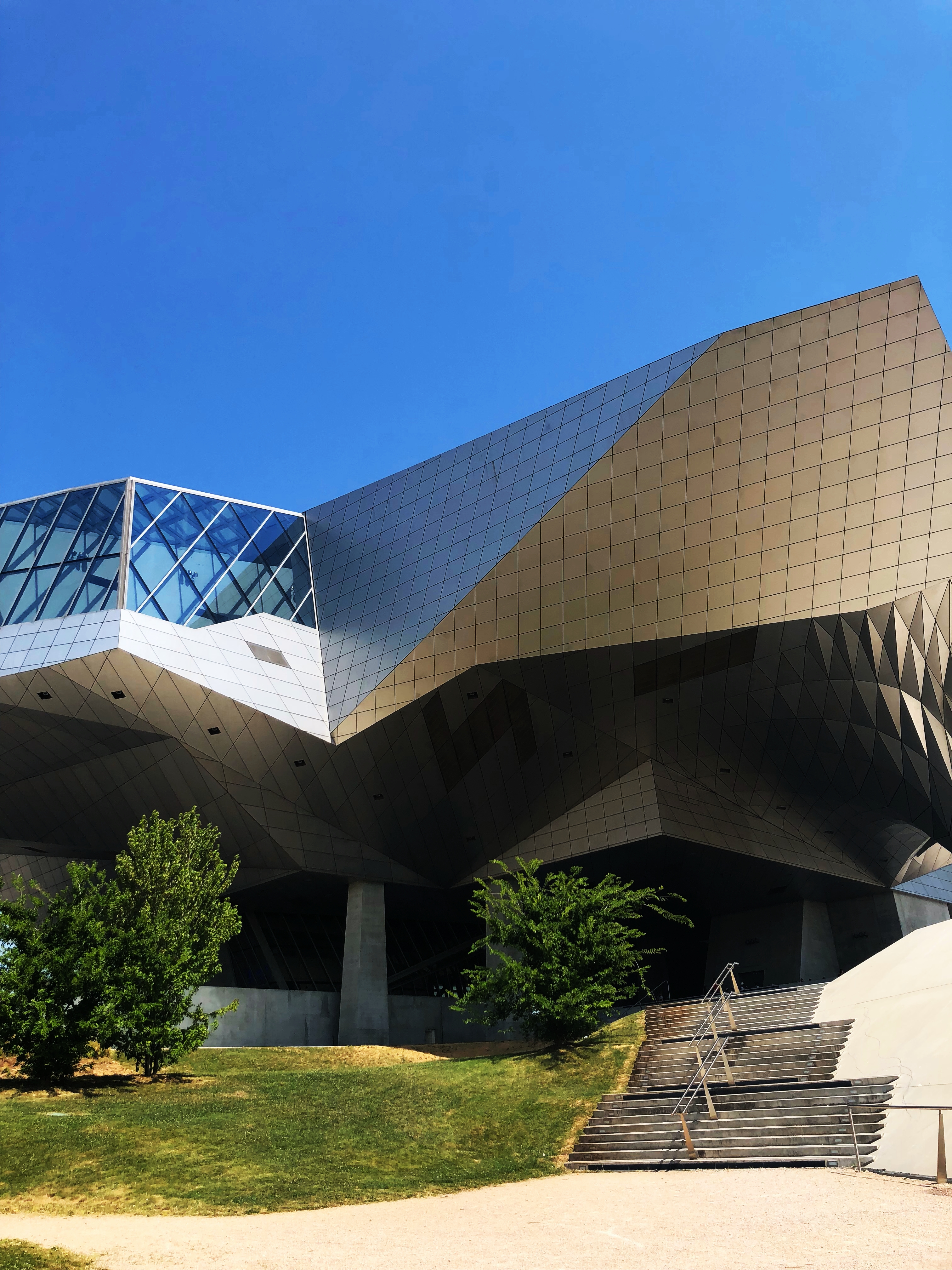
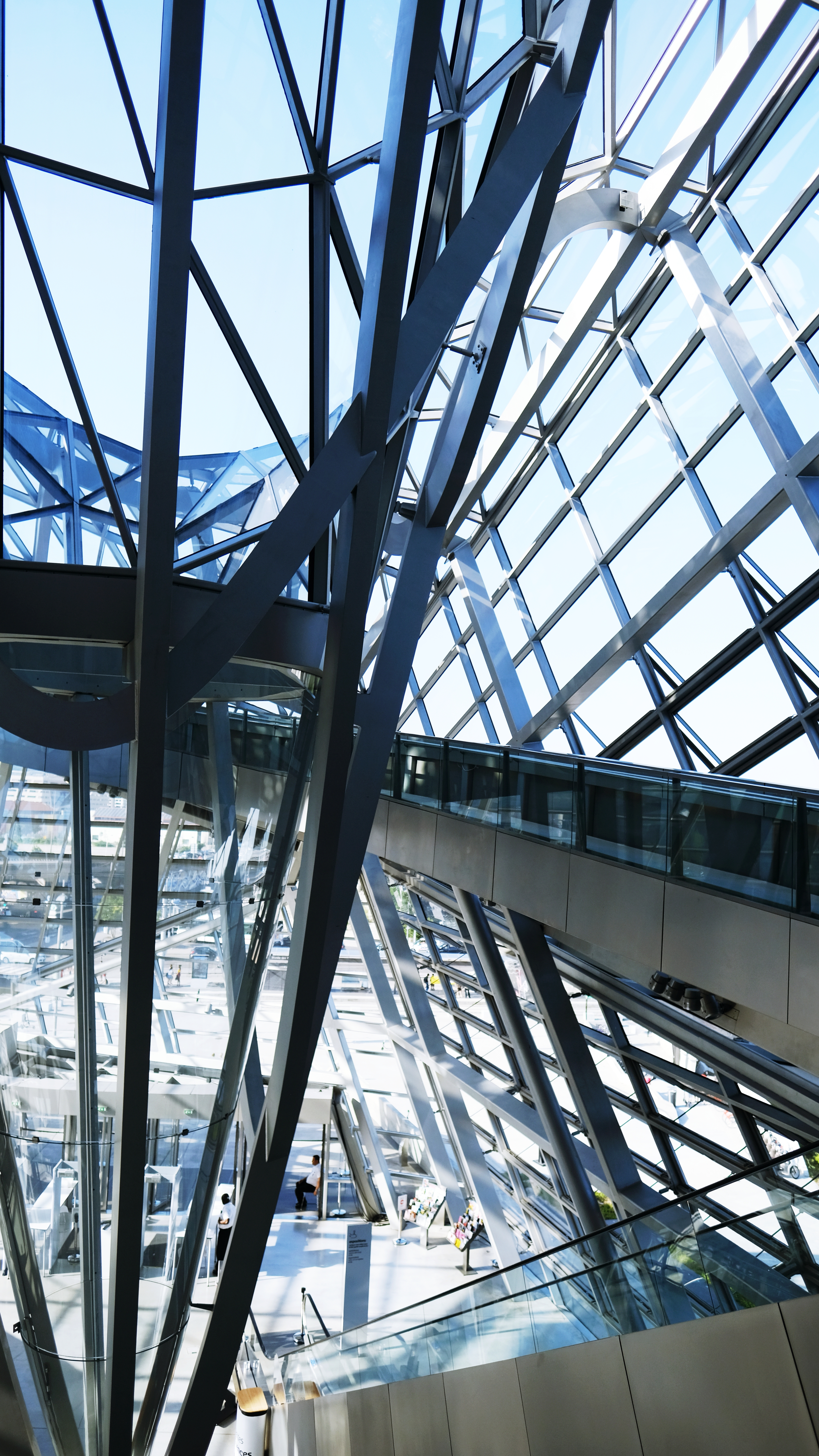
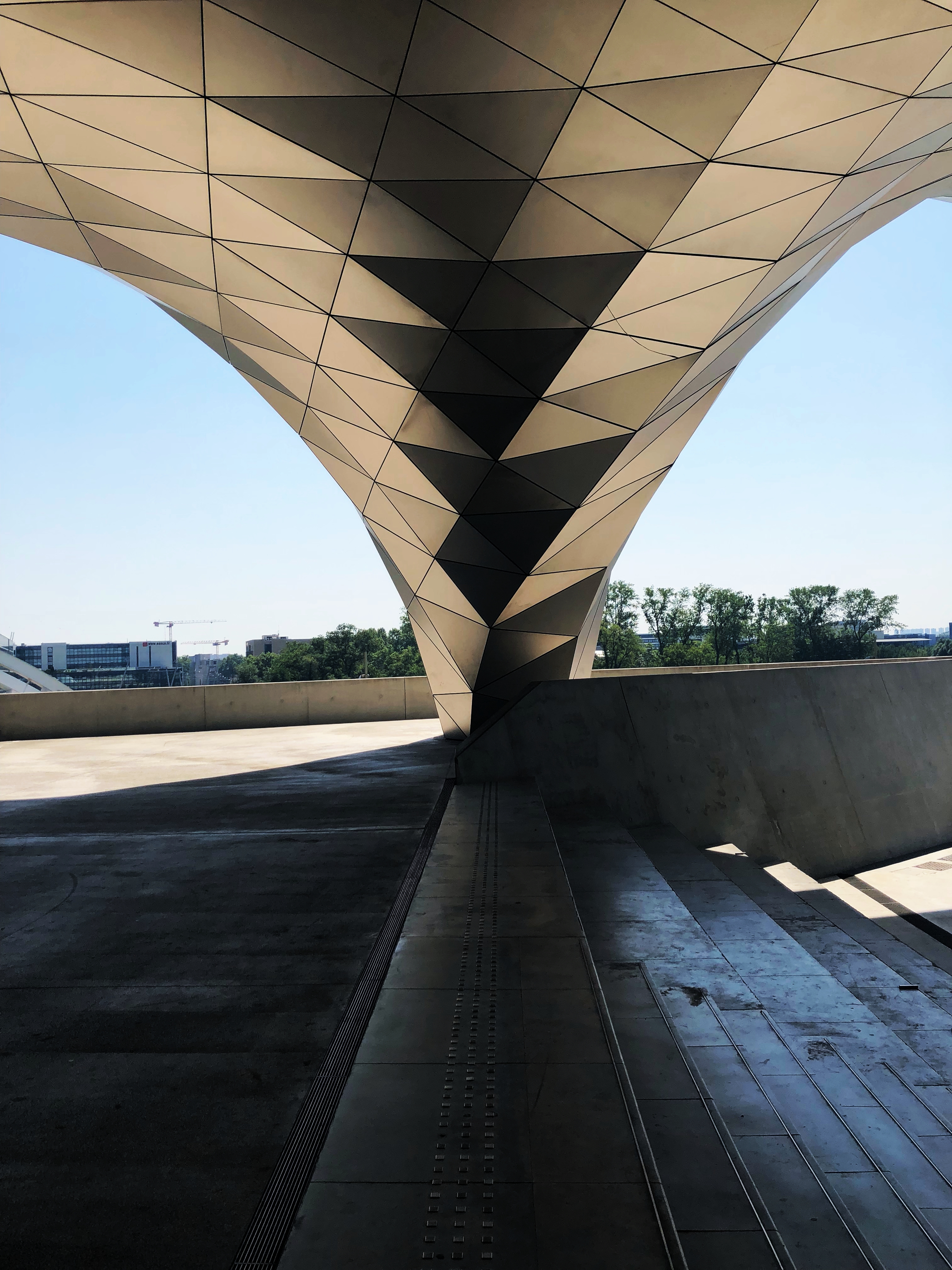
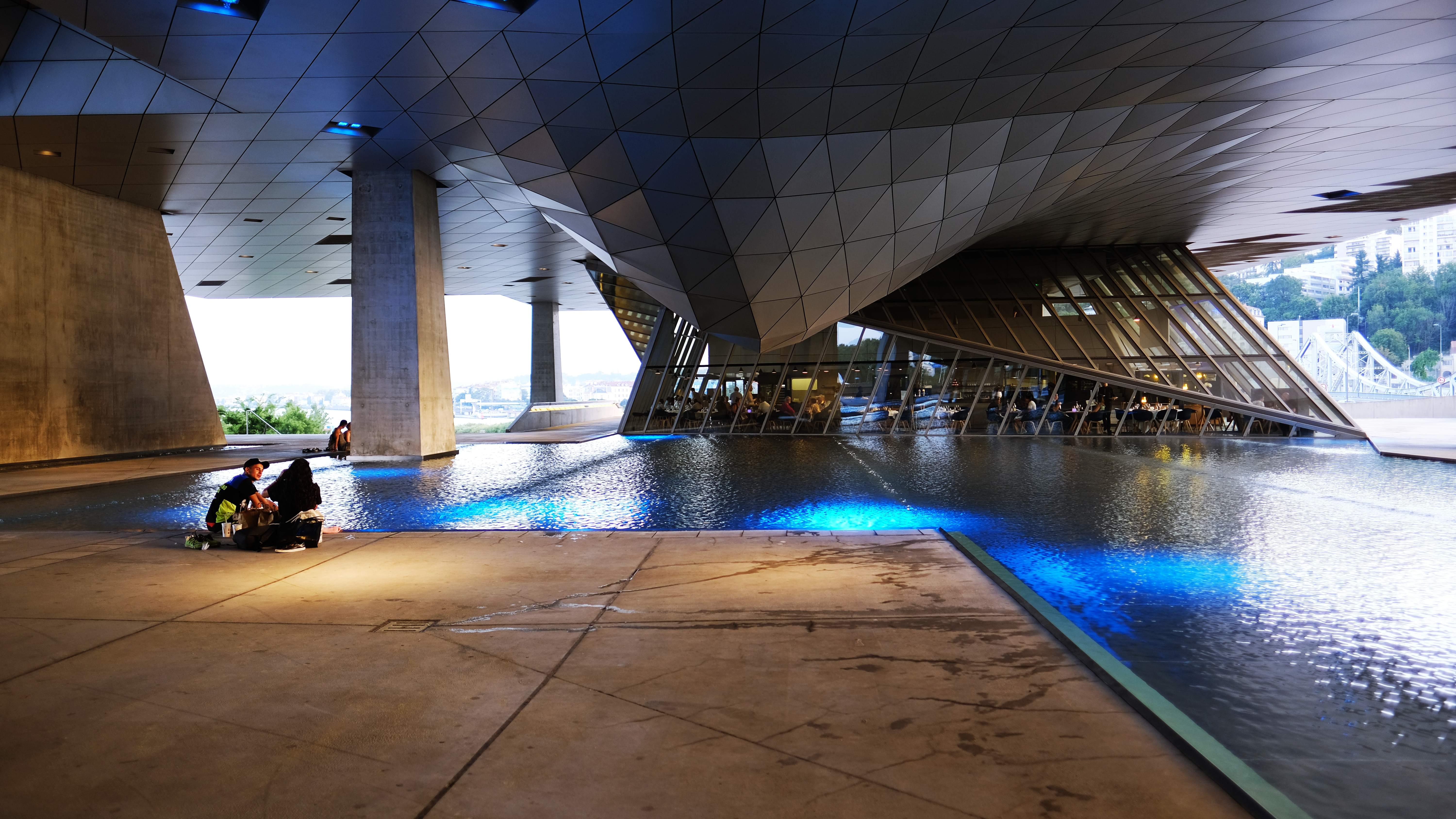
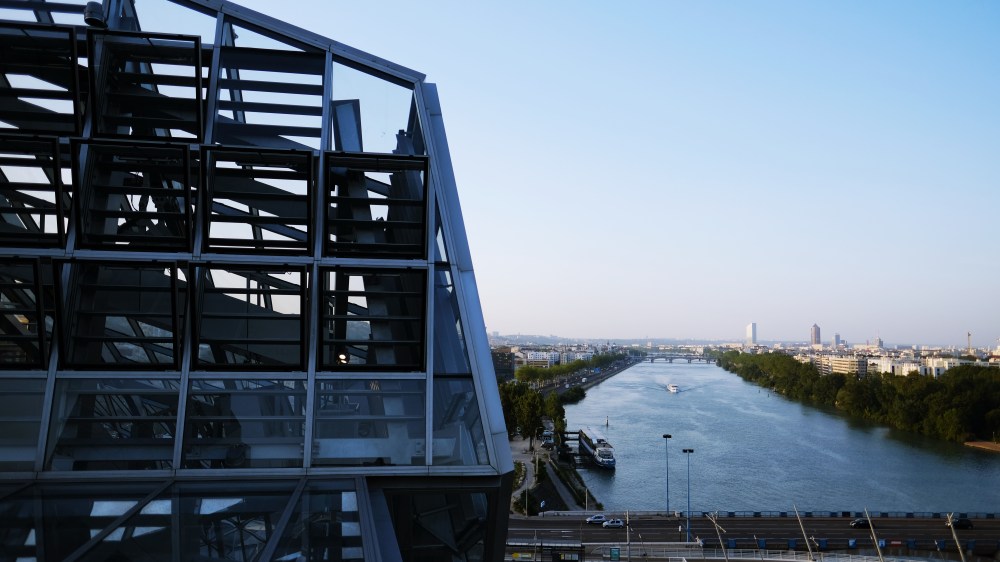
The one building that attracted my attention to La Confluence district was Coop Himmelblau’s Confluence Museum. It is situated at the very tip of the island where the two rivers meet. The use of glass enables beautiful views of the city that allows you to see how the developed neighborhoods from various groups seamlessly flow with each other. The idea of the museum was to be a “public gateway for knowledge” which ties to the site as a gateway for goods using the river as main transport system. Today, the light rail system has a stop in front of the museum which makes visiting the museum more convenient.
EURONEWS Television HQ
Architect: Jakob + Macfarlane
Location: 57 Quai Rambaud, 69002 Lyon
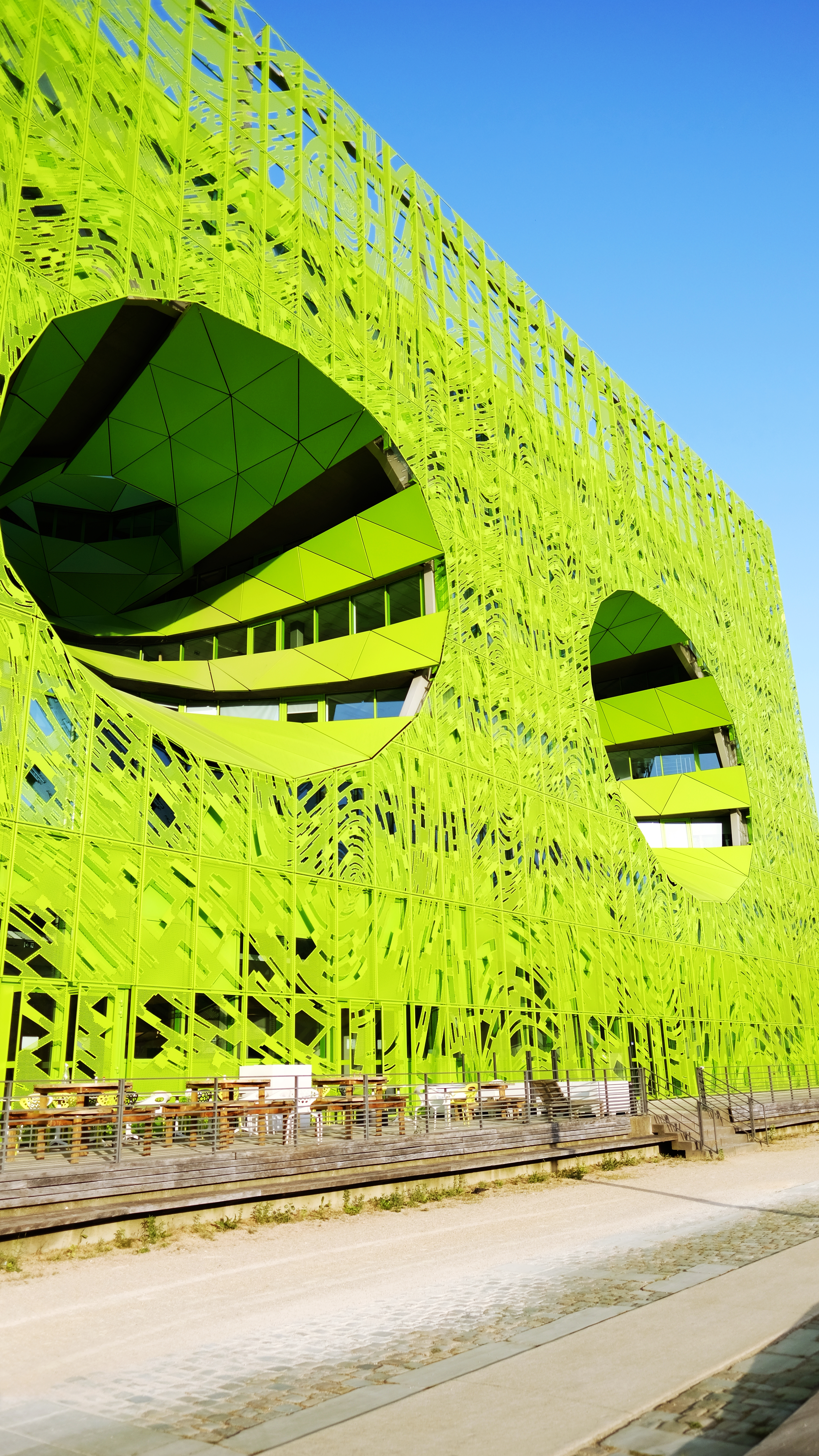
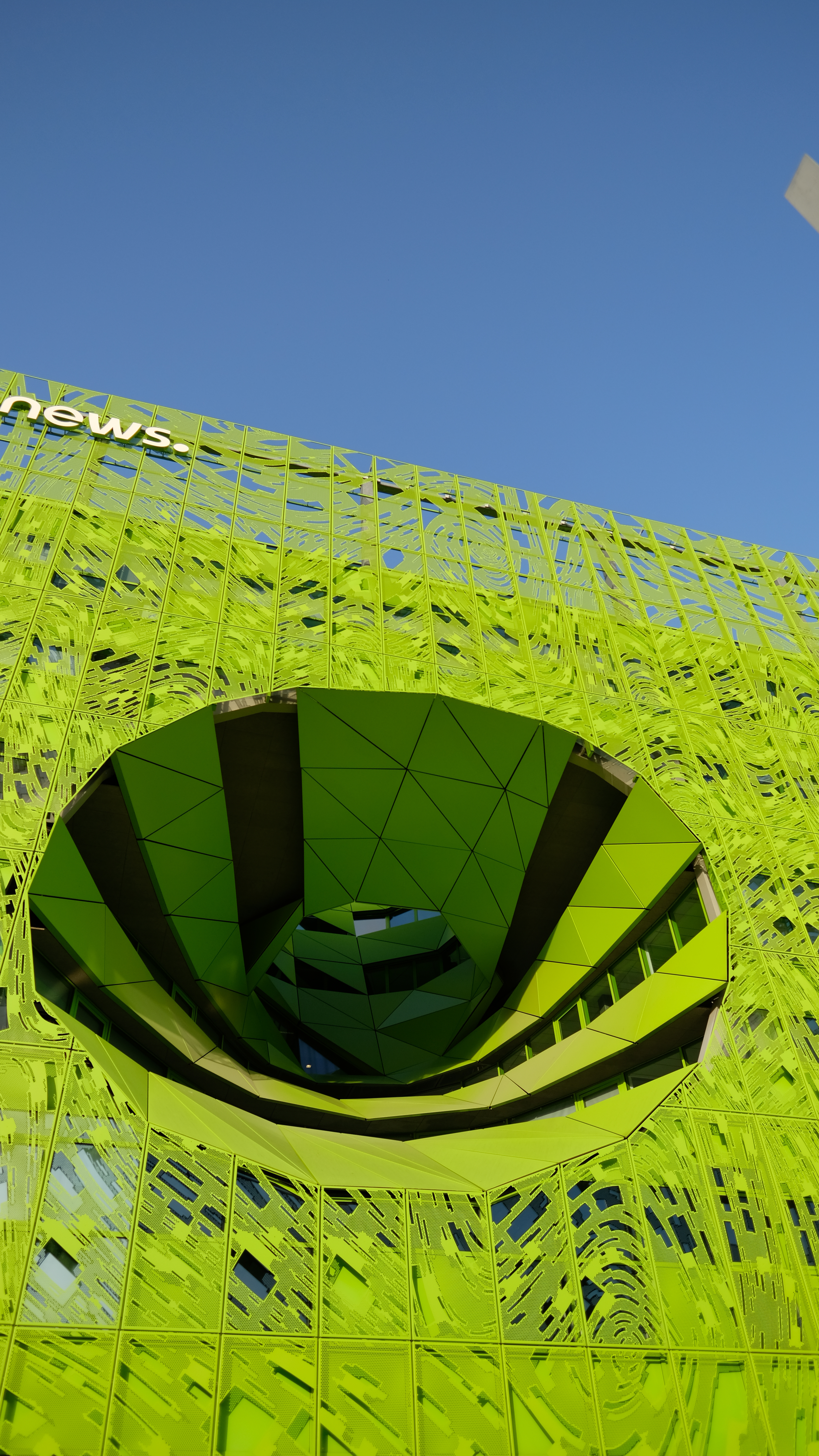
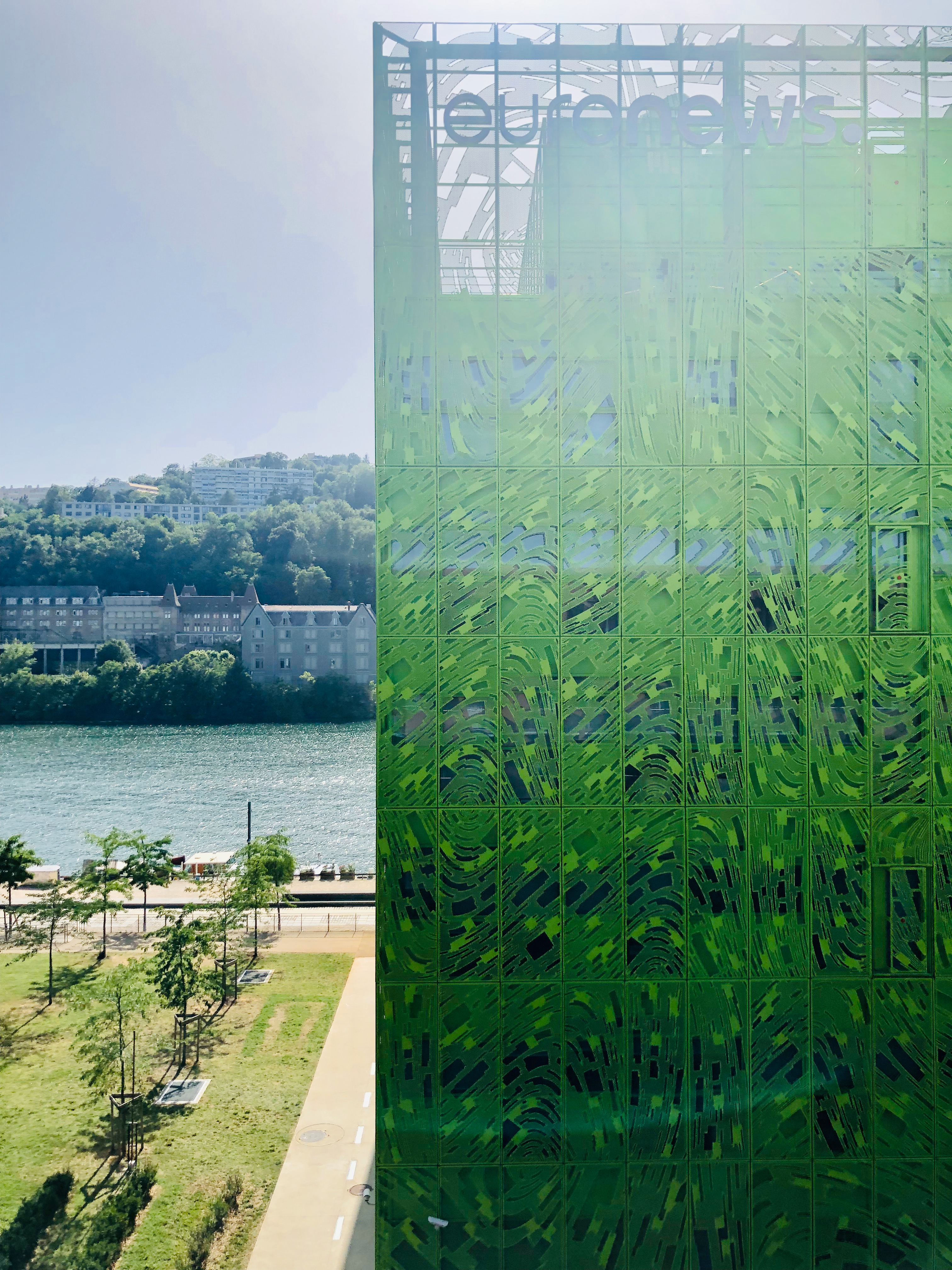
One way to attract attention is to play with colors of the facade and the Euronews Television Headquarters, designed by Jakob and Macfarlane plays with neon green. The facade is made up of custom-designed perforated panels. The hole is made up of solid panels to create rows of transparency for views of the river.
Orange Cube
Architect: Jakob + Macfarlane
Location: 42 Quai Rambaud, 69002 Lyon
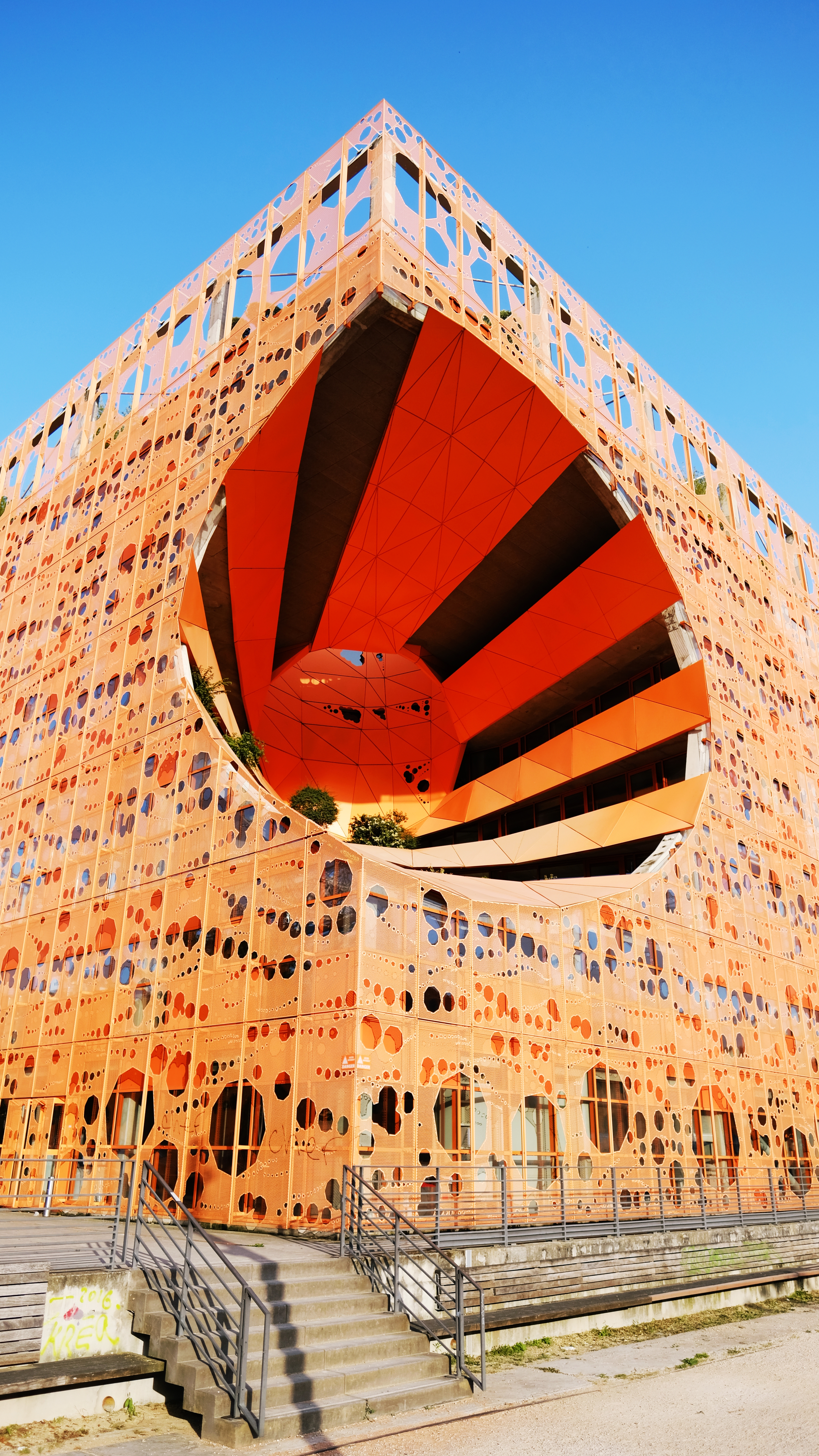
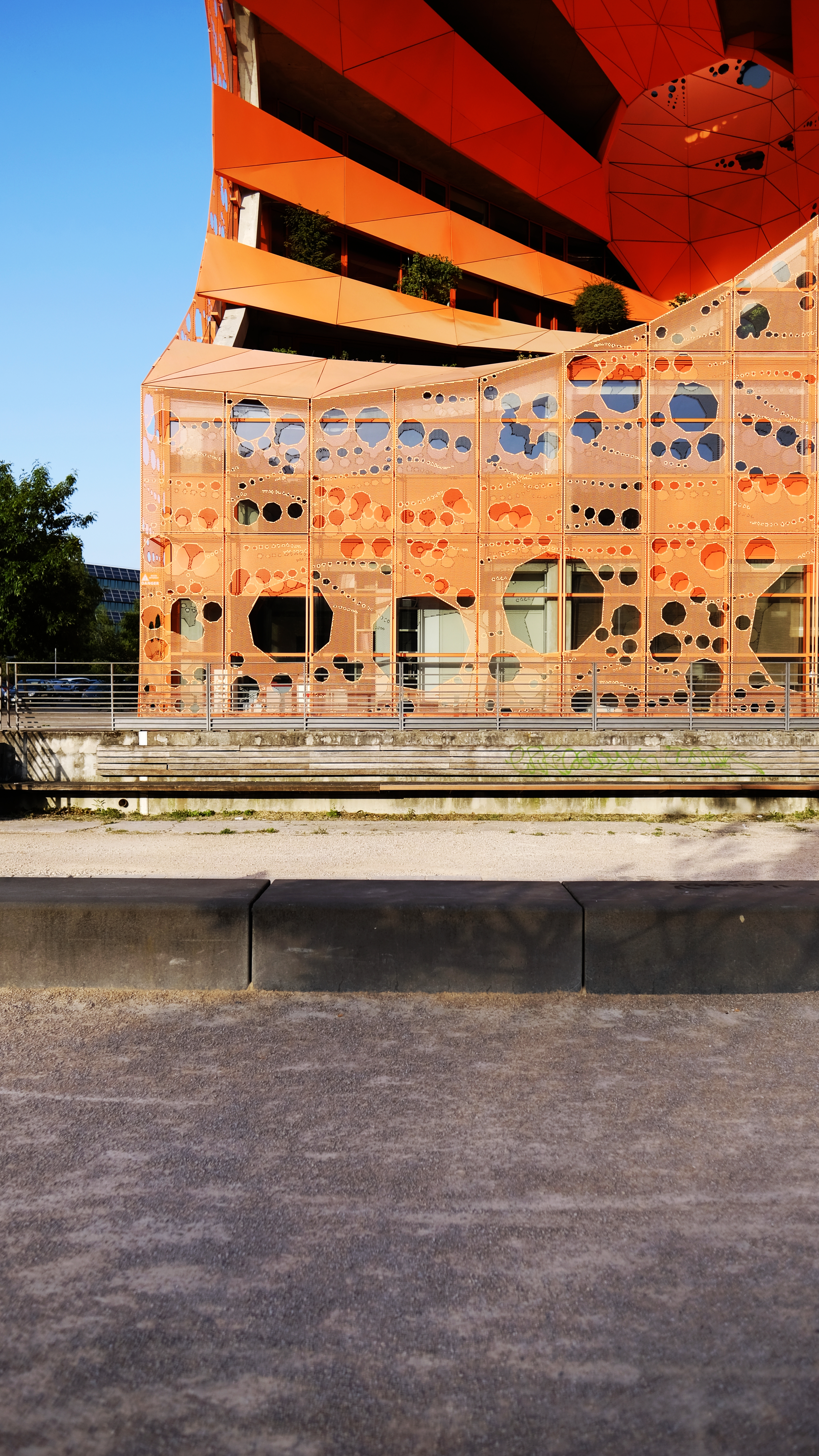
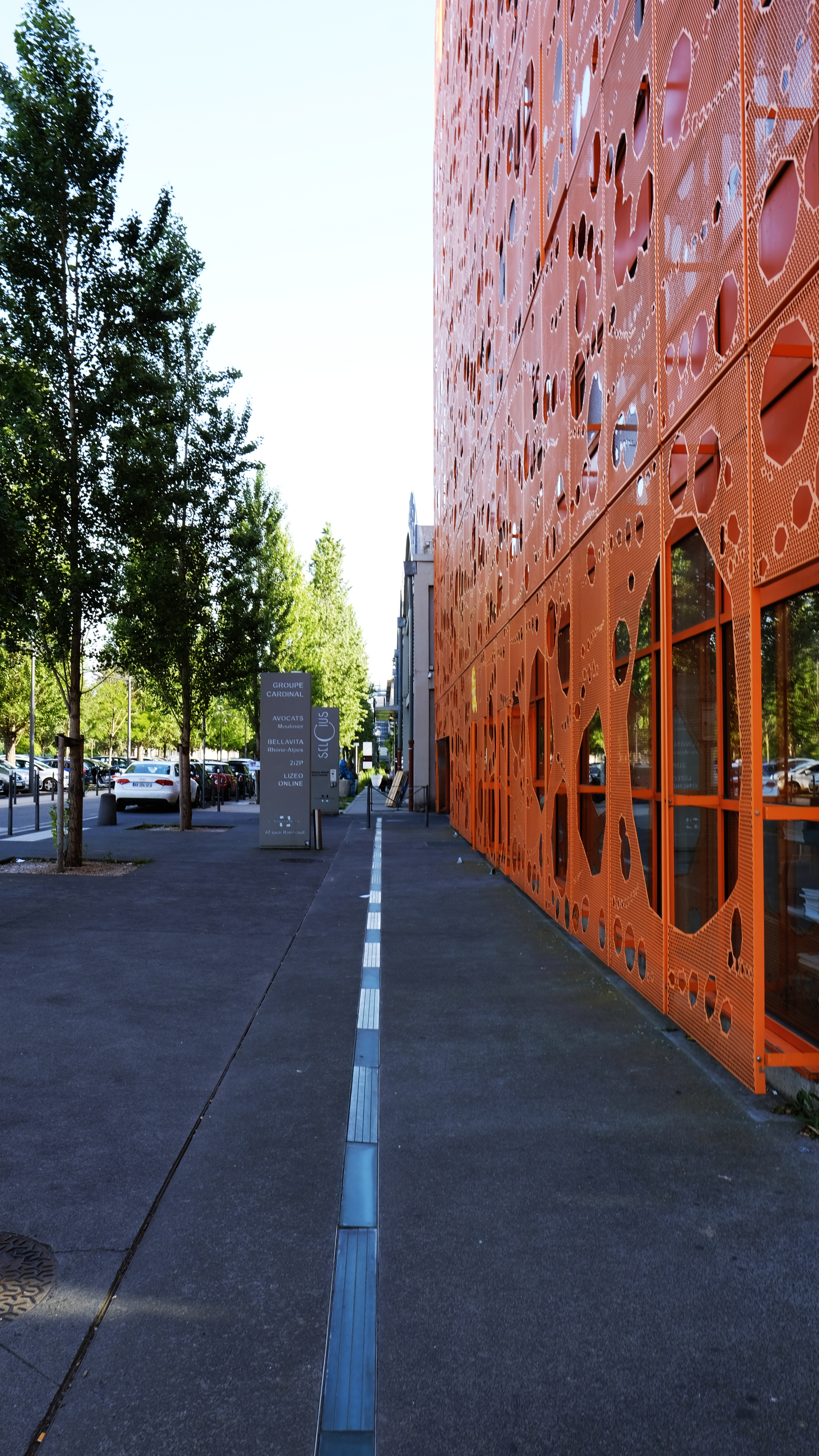
Jakob + Macfarlane also designed the Orange Cube which is an office building by the riverfront. The same concept of the perforated panels on the facade for the Euronews HQ is applied to the Orange Cube. Therefore, you’ll see both the neon green and orange cube during your walk in the Confluence neighborhood.
La Sucrière
Architect: William Vassal
Location: 49-50 Quai Rambaud, 69002 Lyon
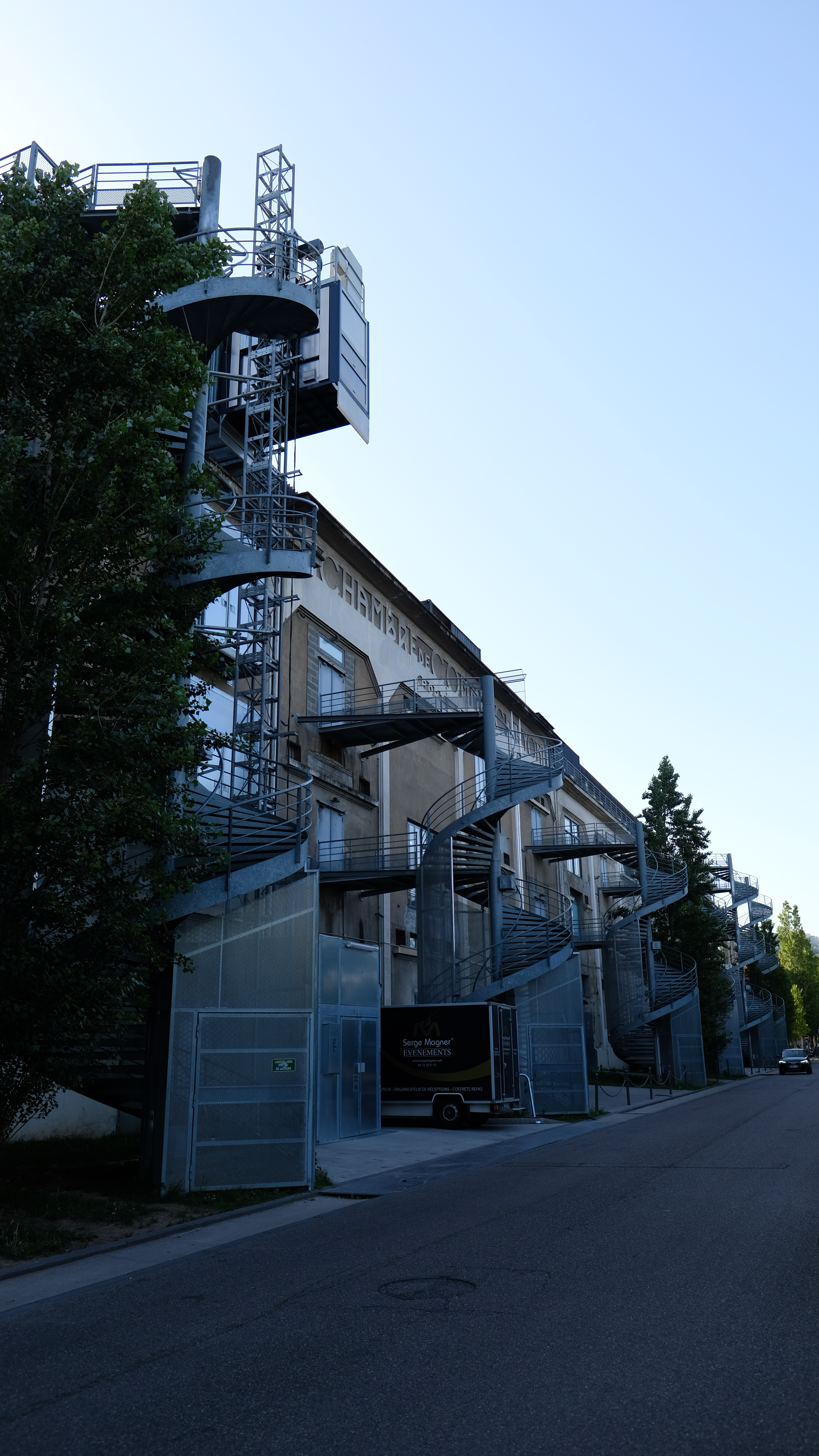
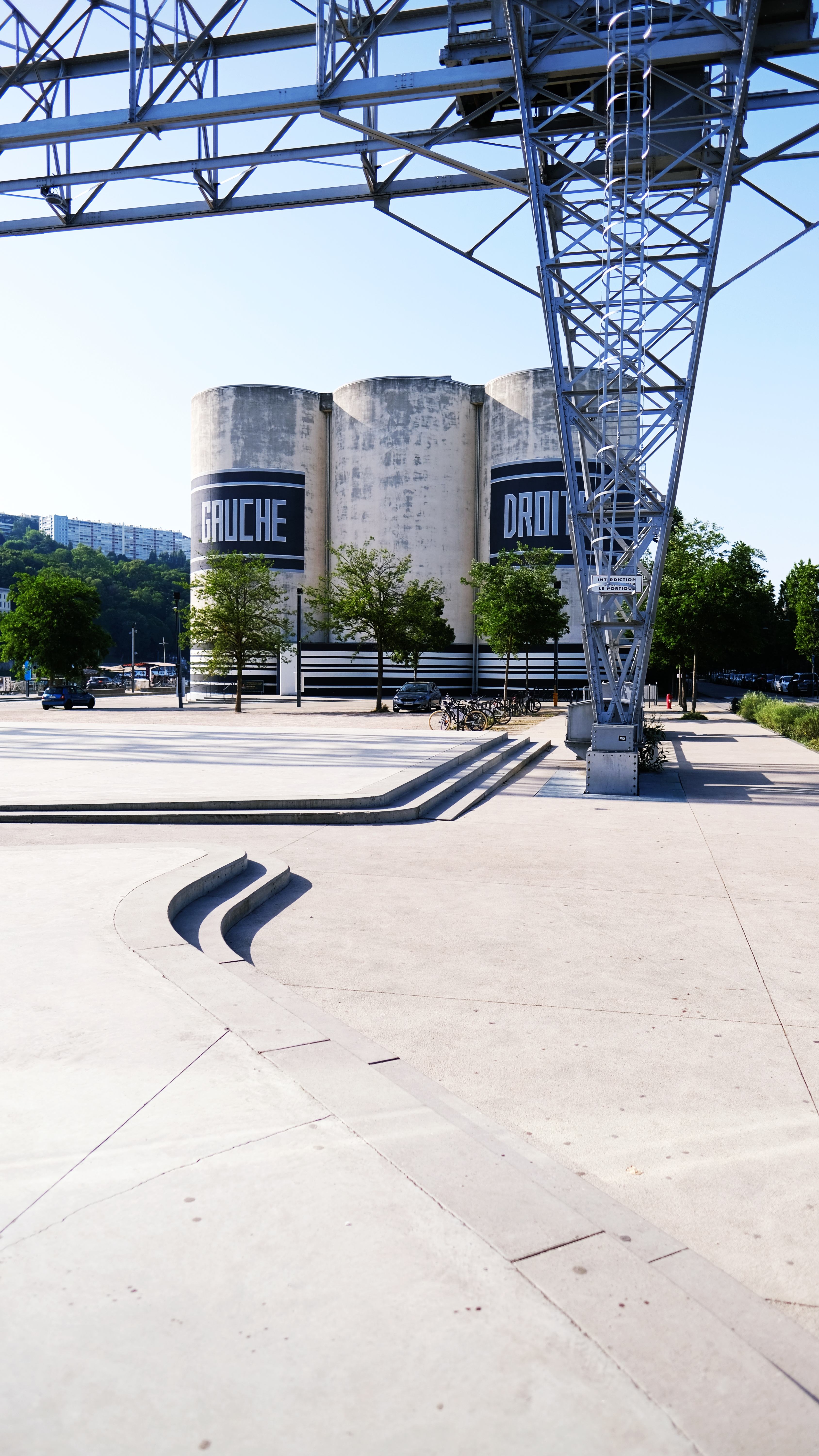
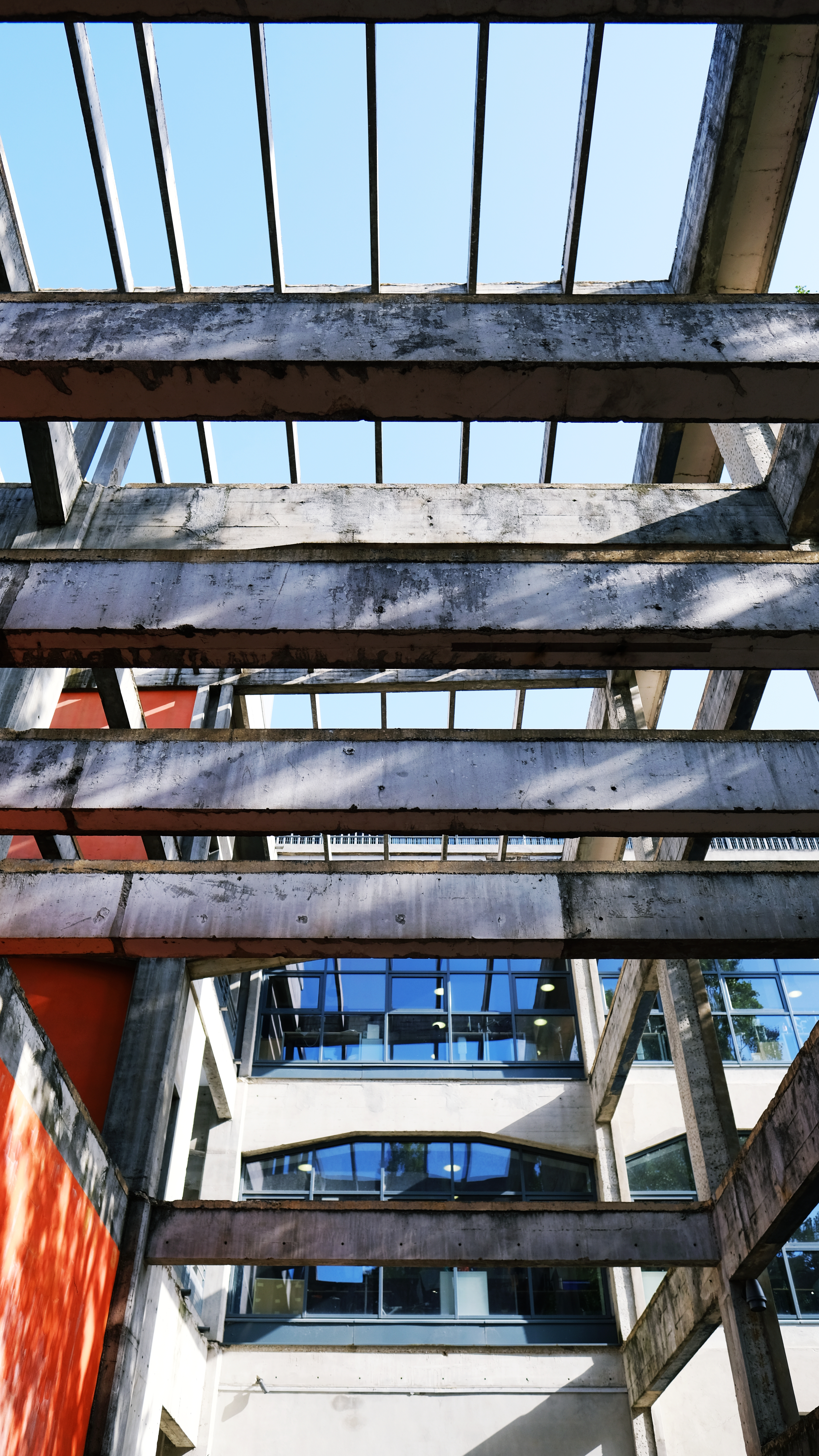
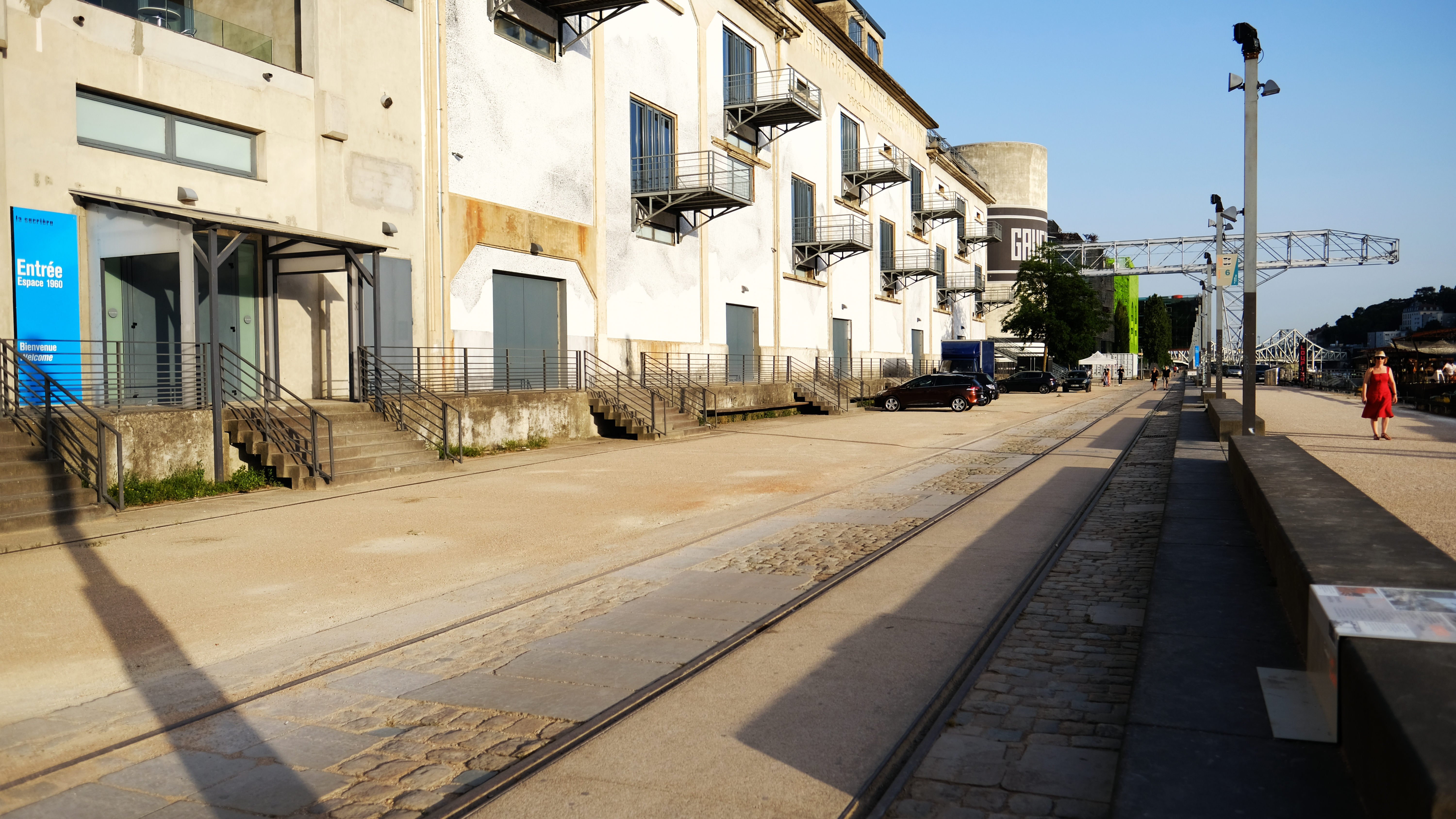

From the title, La Sucrière used to be a sugar factory warehouse, but it was abandoned in 1990. In 2003, it was renovated to become an exhibition center. Today, it is one of the main venues for the Biennale of Contemporary Art in Lyon. I have always been interested in how architects convert factories and warehouses into art and performance venues. The geometric lines and shapes of the original building create an art installation by itself. The architect added spiral staircases to play with curves and lines.
2. Perrache
Gare de Lyon Perrache & Parc EFFIA Perrache Station
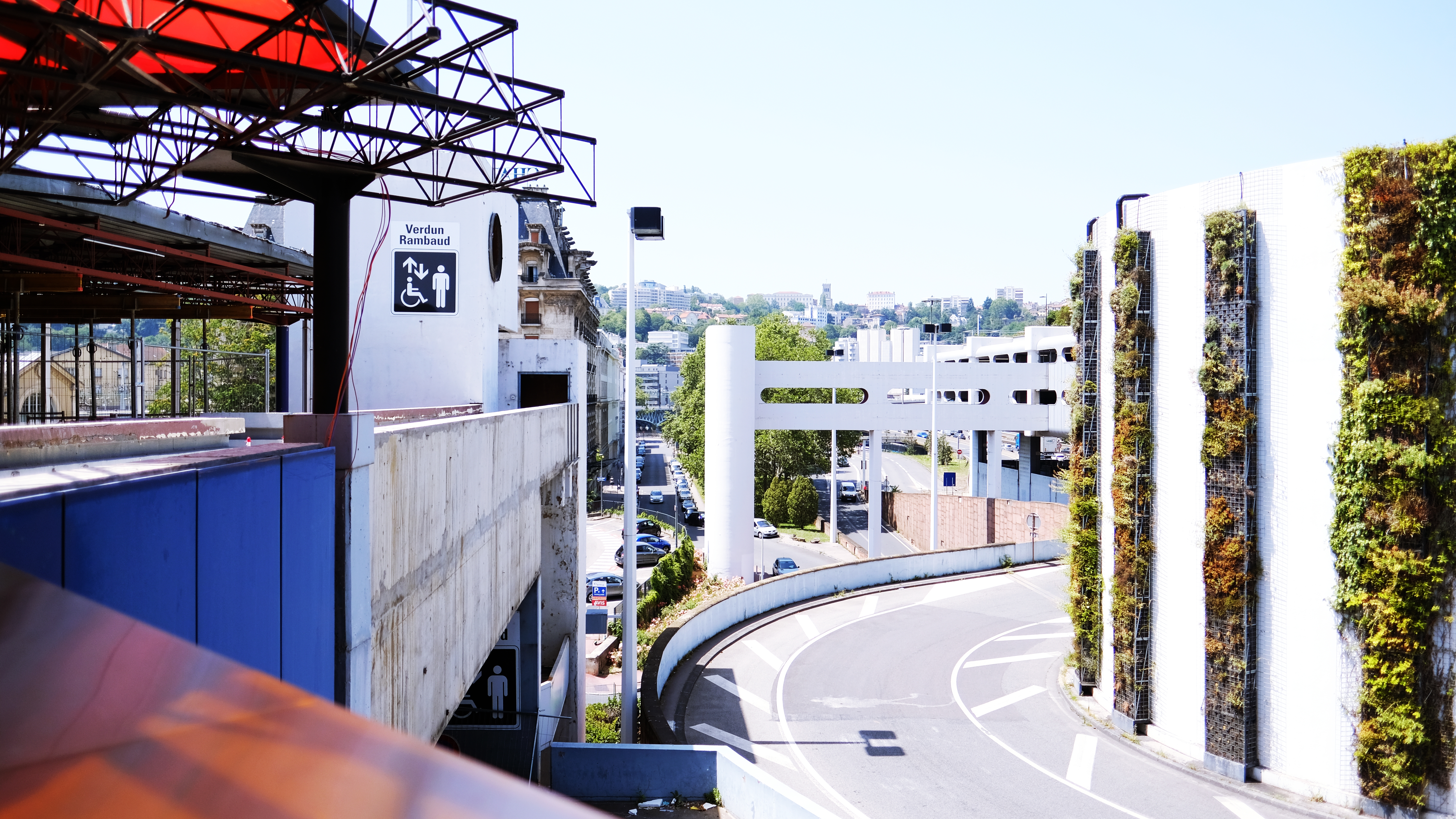
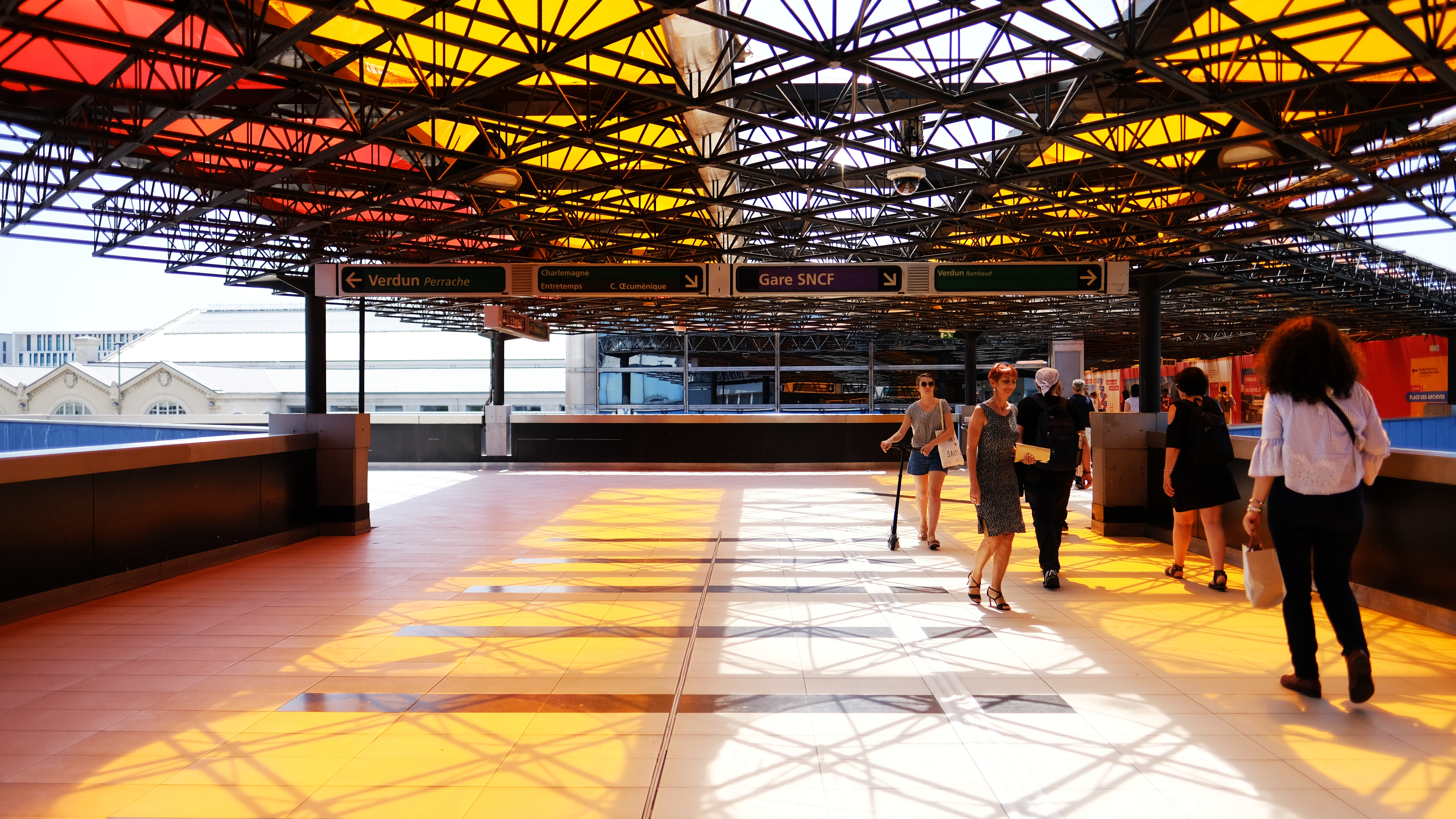
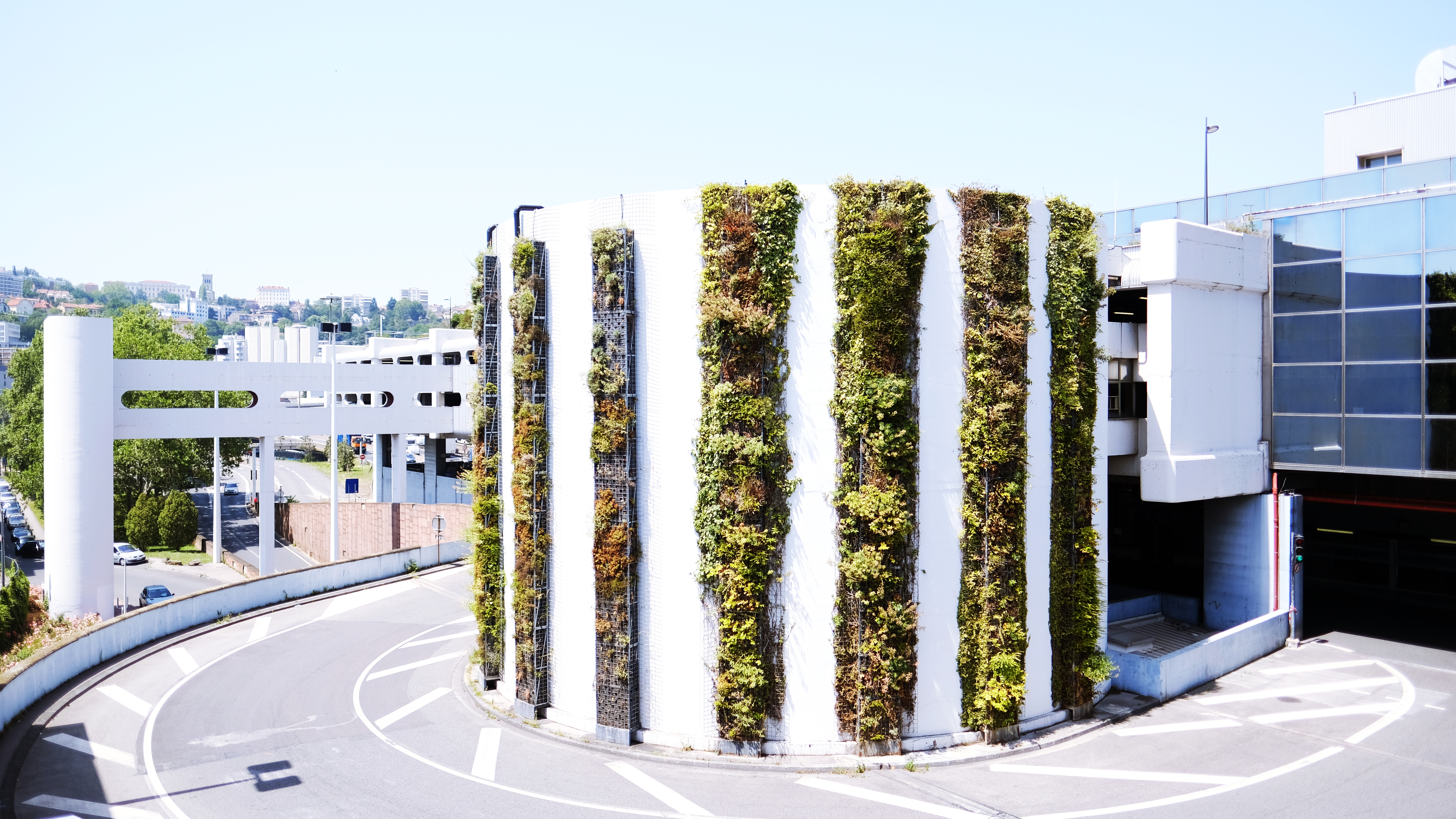
Taking the train from Gare de Lyon Perrache allows one to see how architects turn ordinary train station destinations into fun circulation. French cities are known for the integration of greenary among the built environment. The parking structure for the Perrache station is an example of integrating vertical greenery to break up the solidness of a hard concrete structure. Vertical green strips become transition from the trees to the buildings.
3. Célestins
Parc Célestins (Parking des Célestins)
Location: 1 Rue Gaspard André, 69002 Lyon
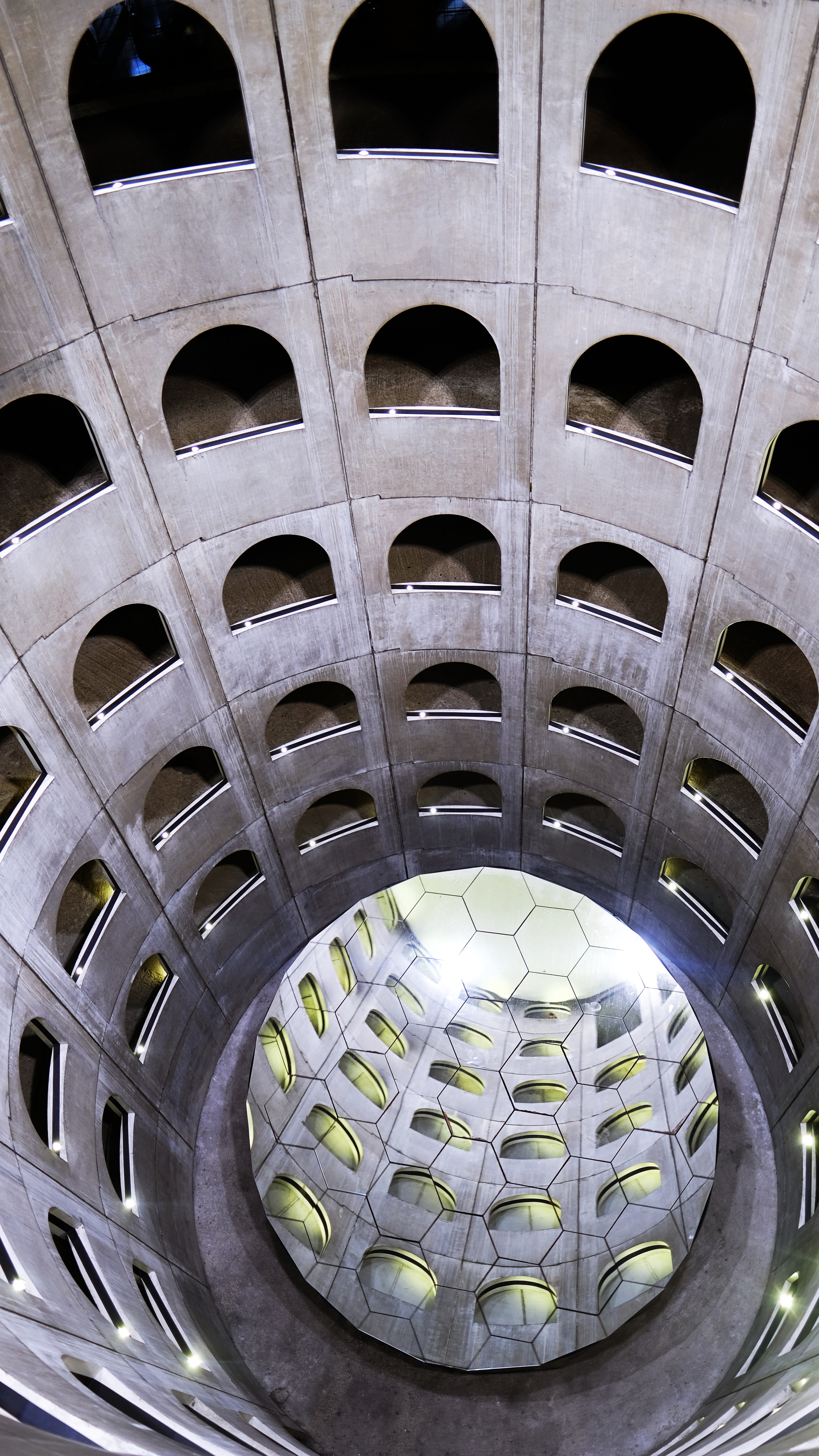
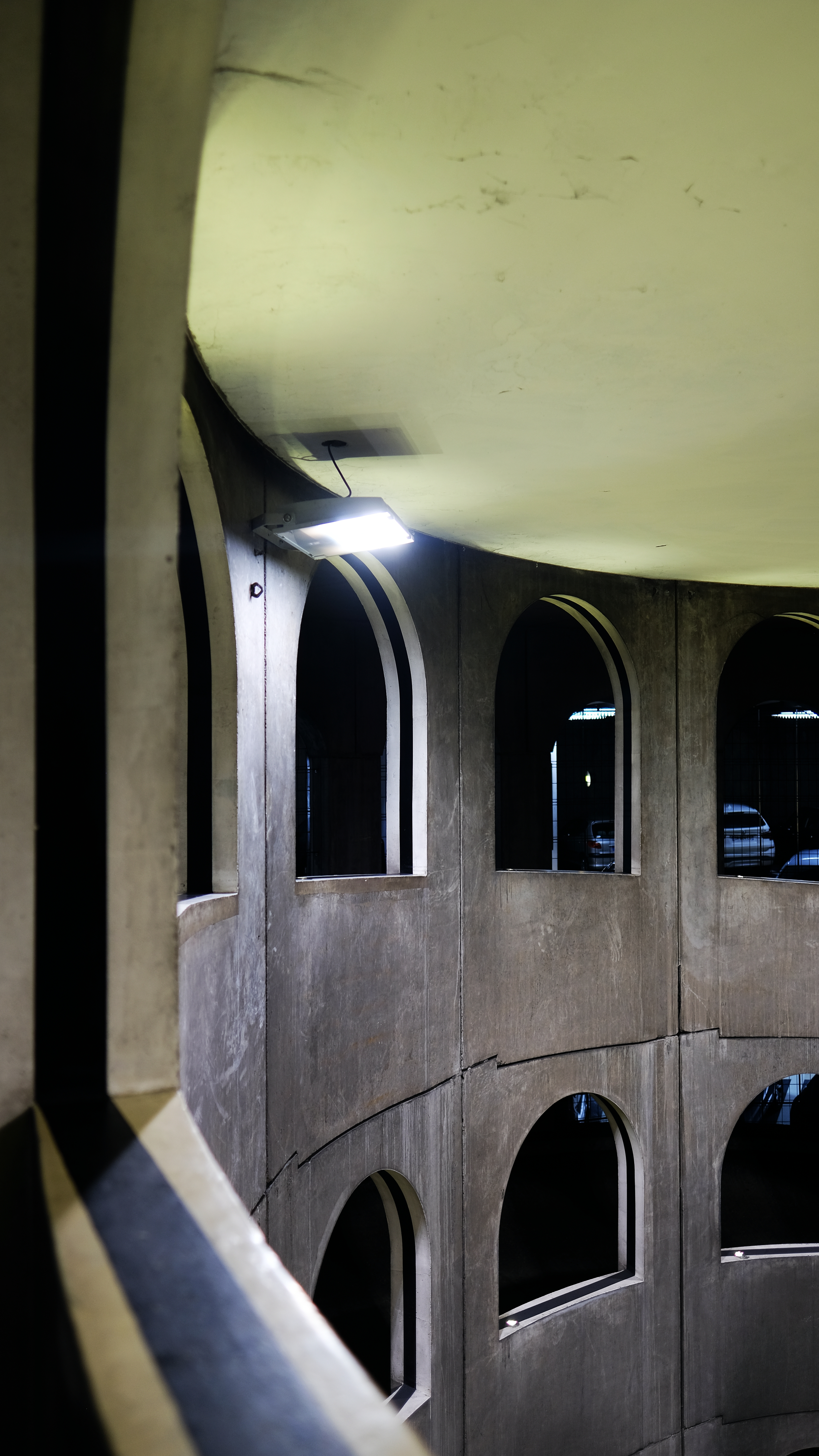
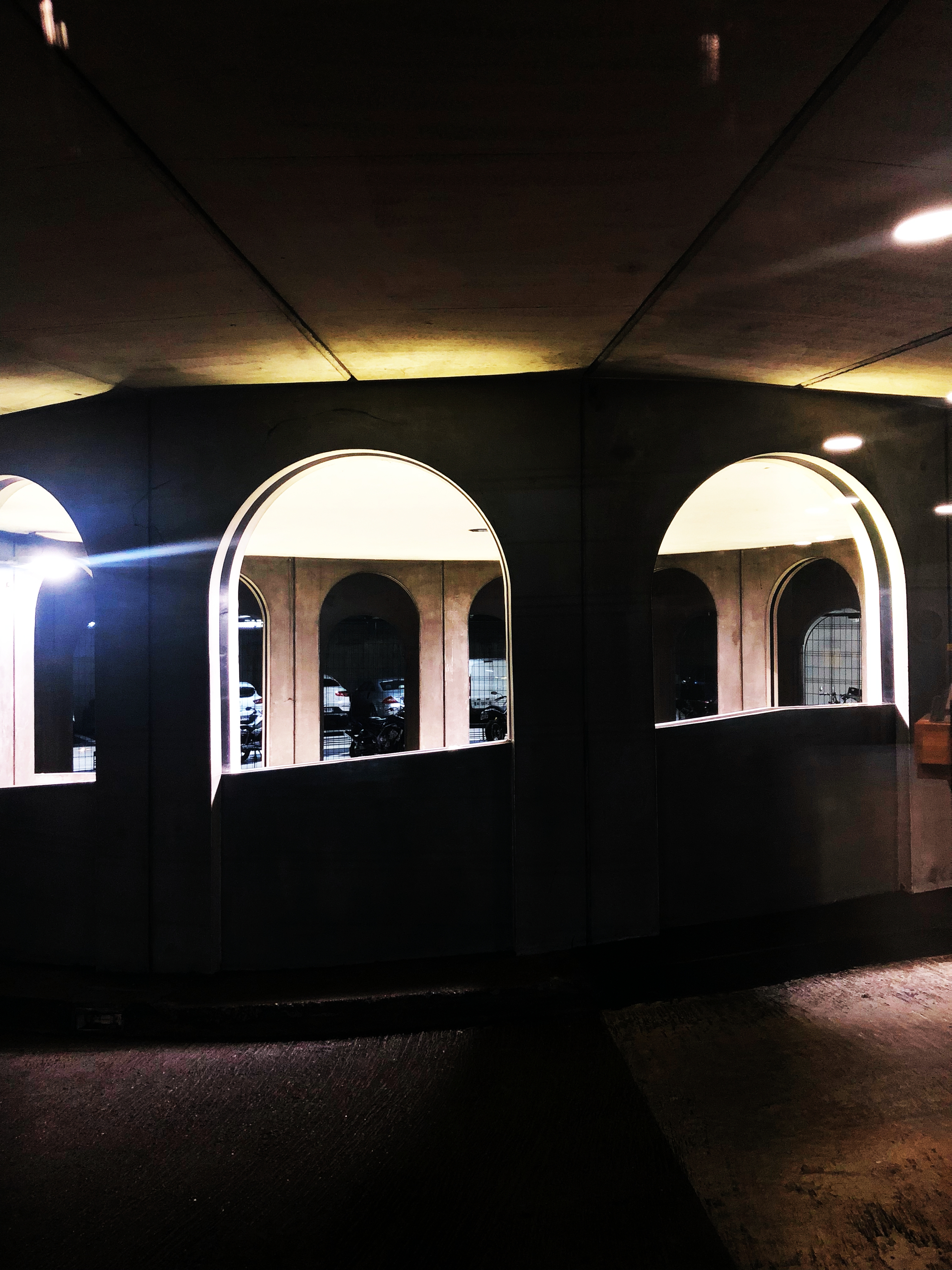
Visiting unique car parks makes a city’s visit more interesting. Parking des Célestins is located at Place des Célestins. Place des Célestins dates back to before 1300s when the Knights Templar owned the land. After Knights Templar was evicted, the Celetines built housing and a theater in the plaza. Eventually, the redevelopment of Place des Célestins in 1995 included adding underground parking, designed by Yan D. Pennors. There is a large lightwell in the middle with a series of arches spiraling up. At the bottom of the lightwell is a large rotating mirror that acts as a refracting telescope by reflecting light into the car park’s interior.
4. Fouvière
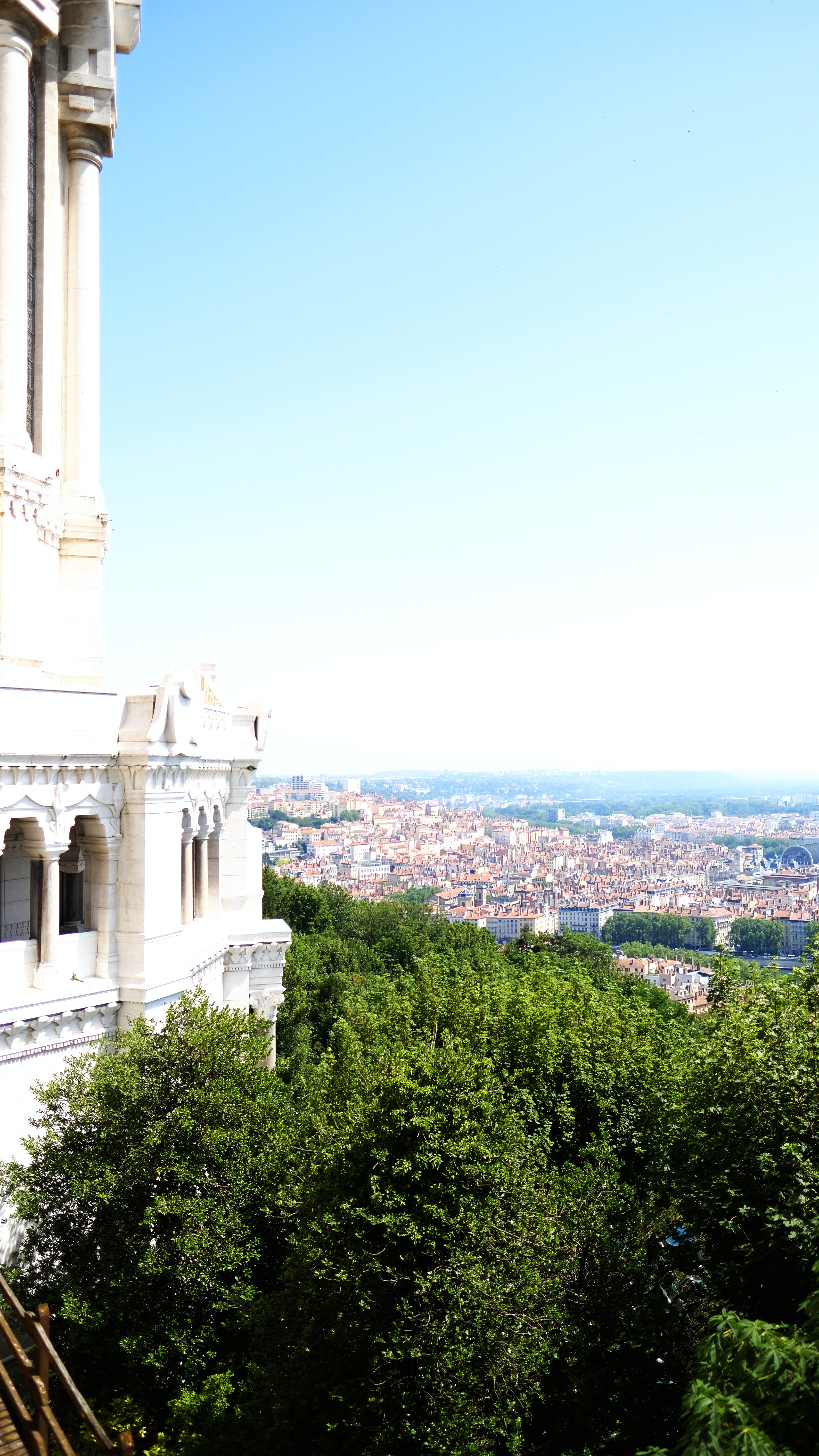
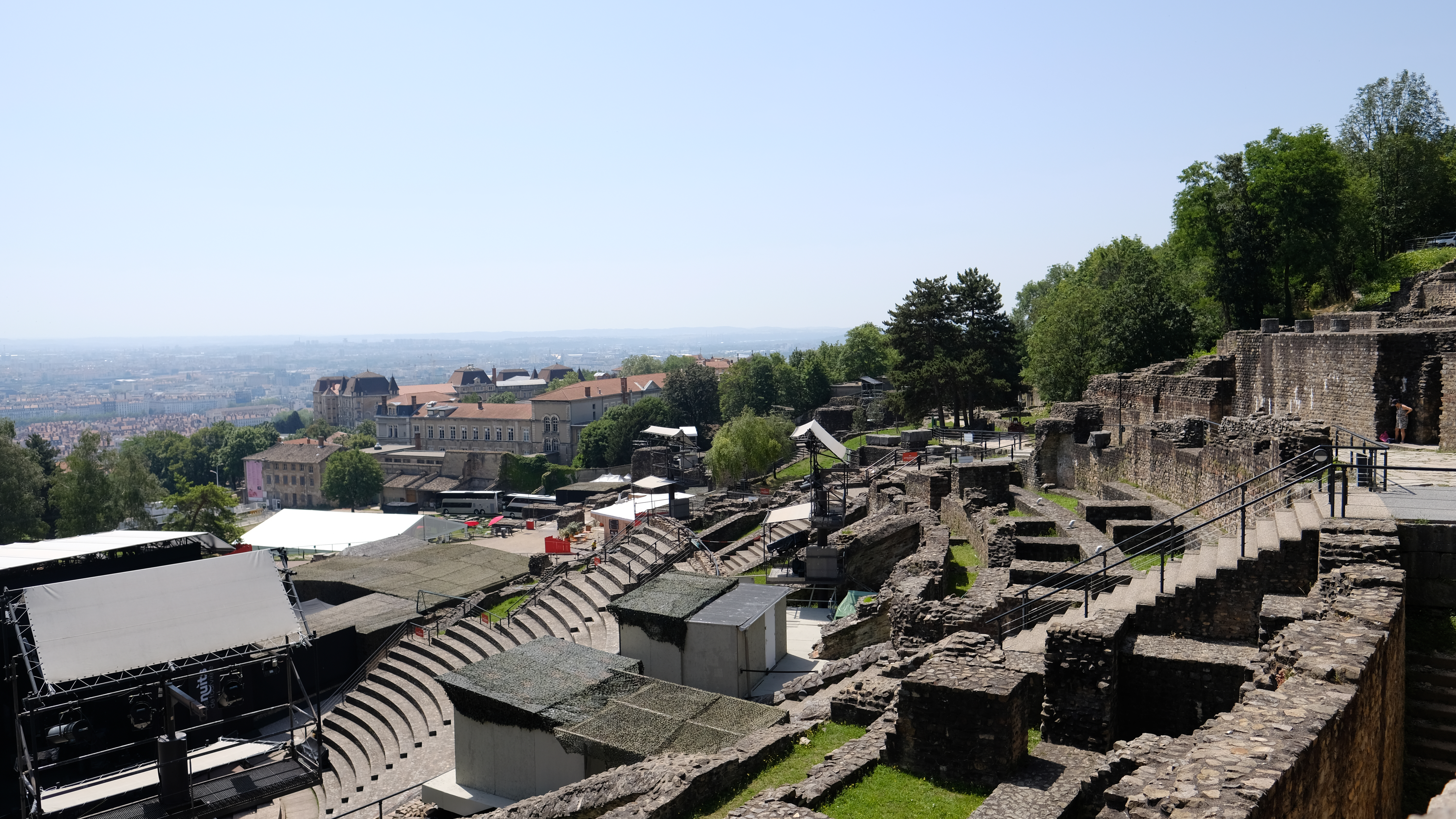
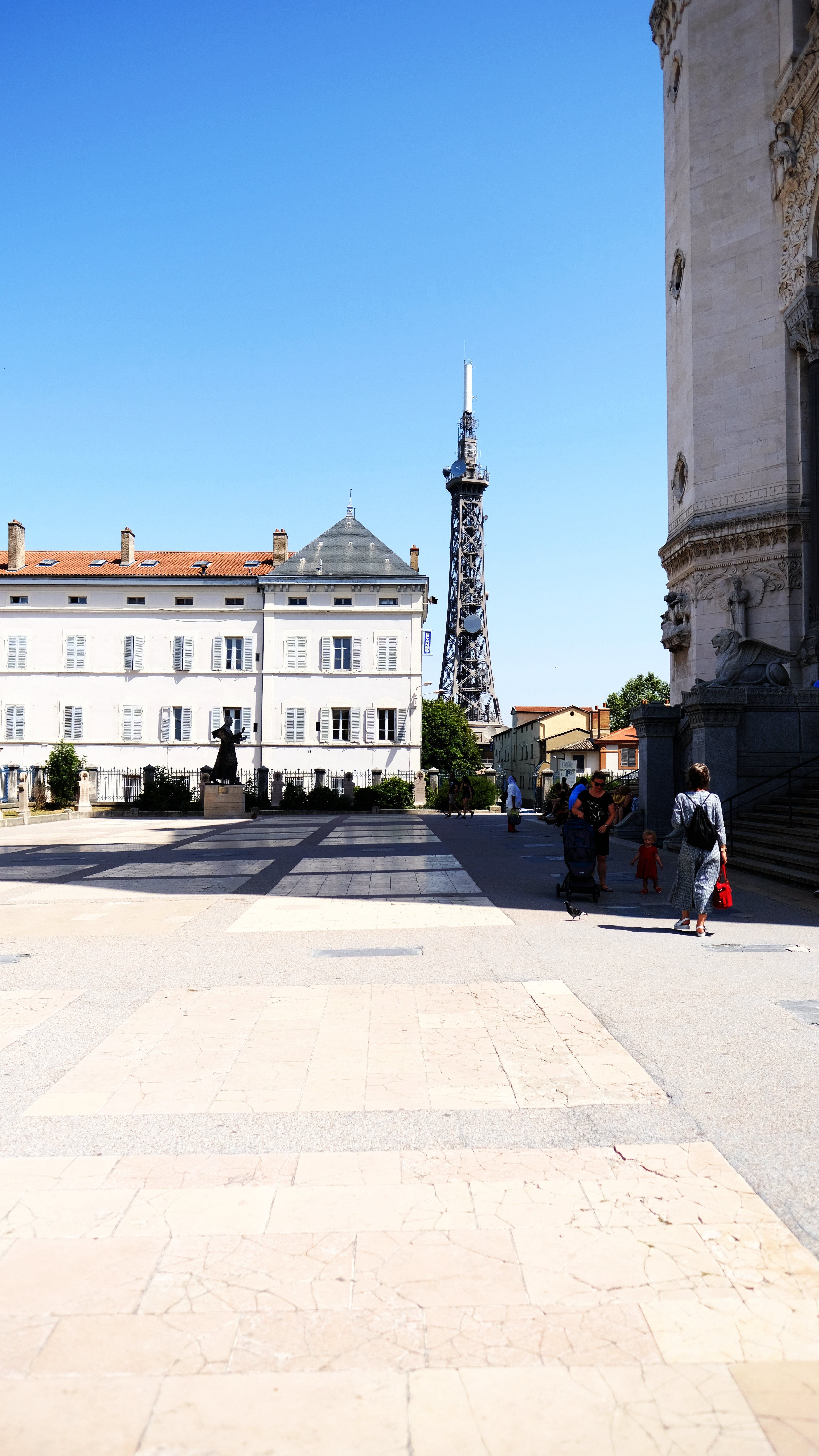
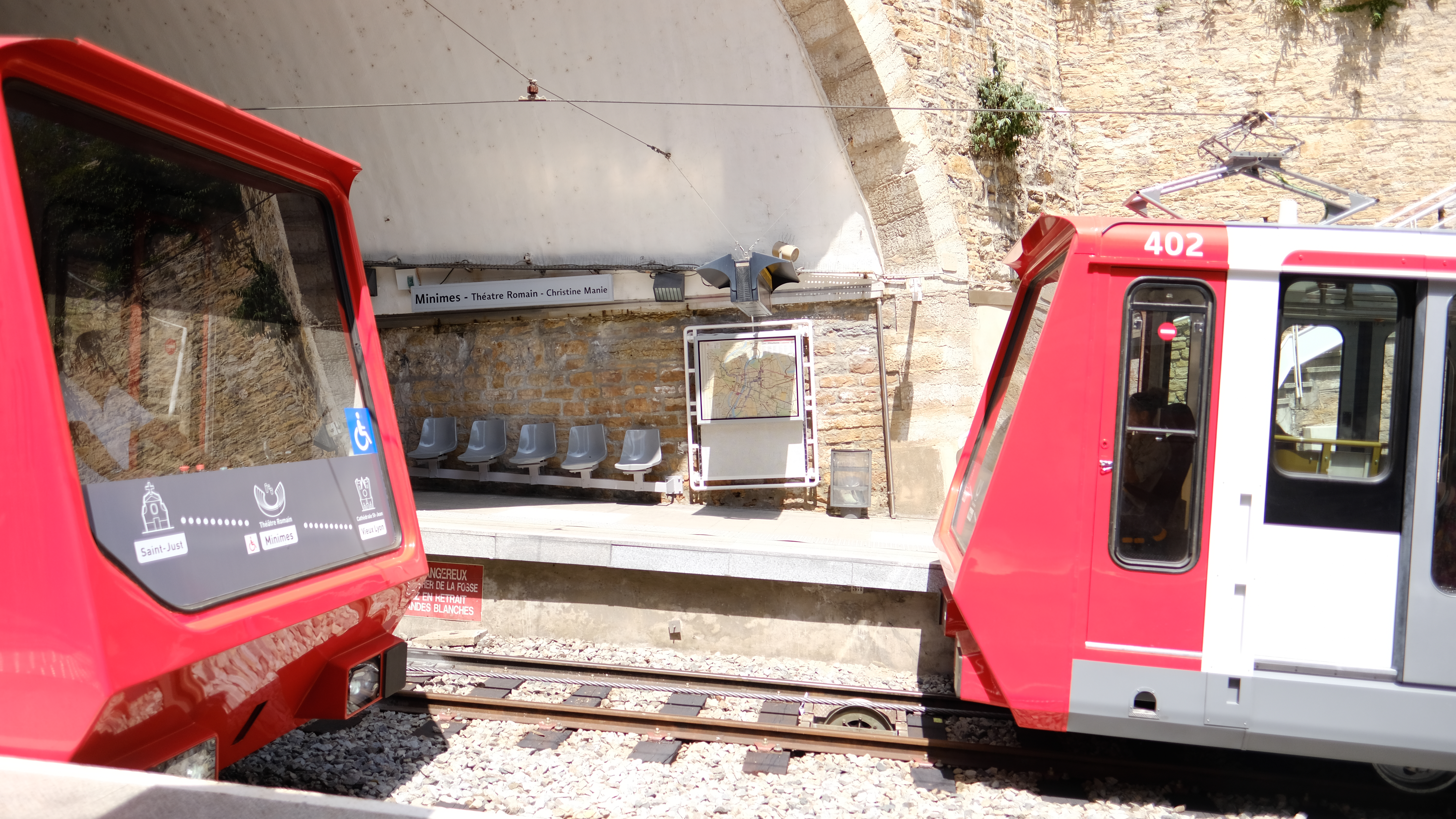
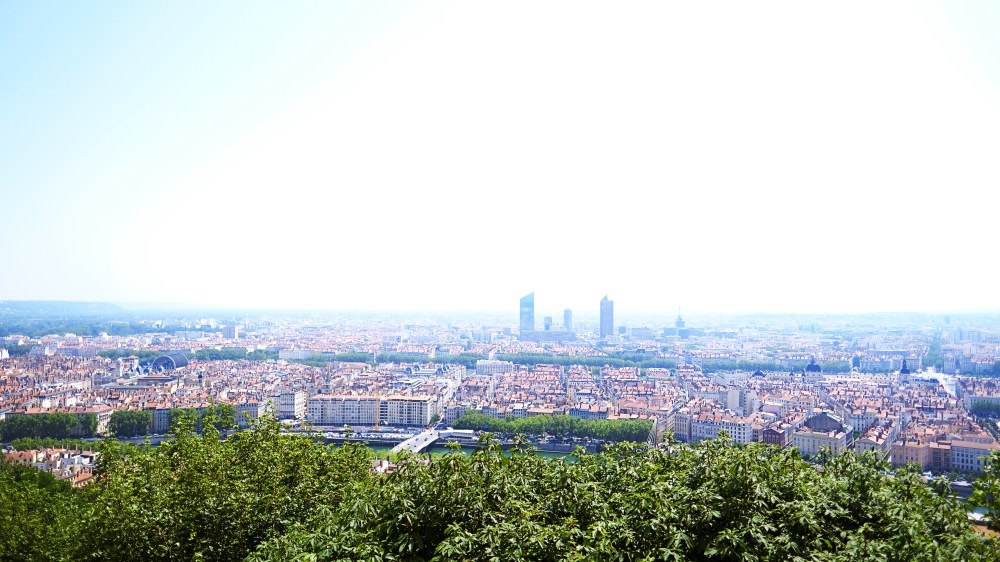
Fouvière is the site where Romans settled. It is on the hill located west of River Saône and is accessible by two of the oldest funicular railways. The Basilica of Notre Dame de Fouvière and Metallic Tower of Fouvière are also located in this district, giving spectacular views of the city.
4. Vieux Lyon
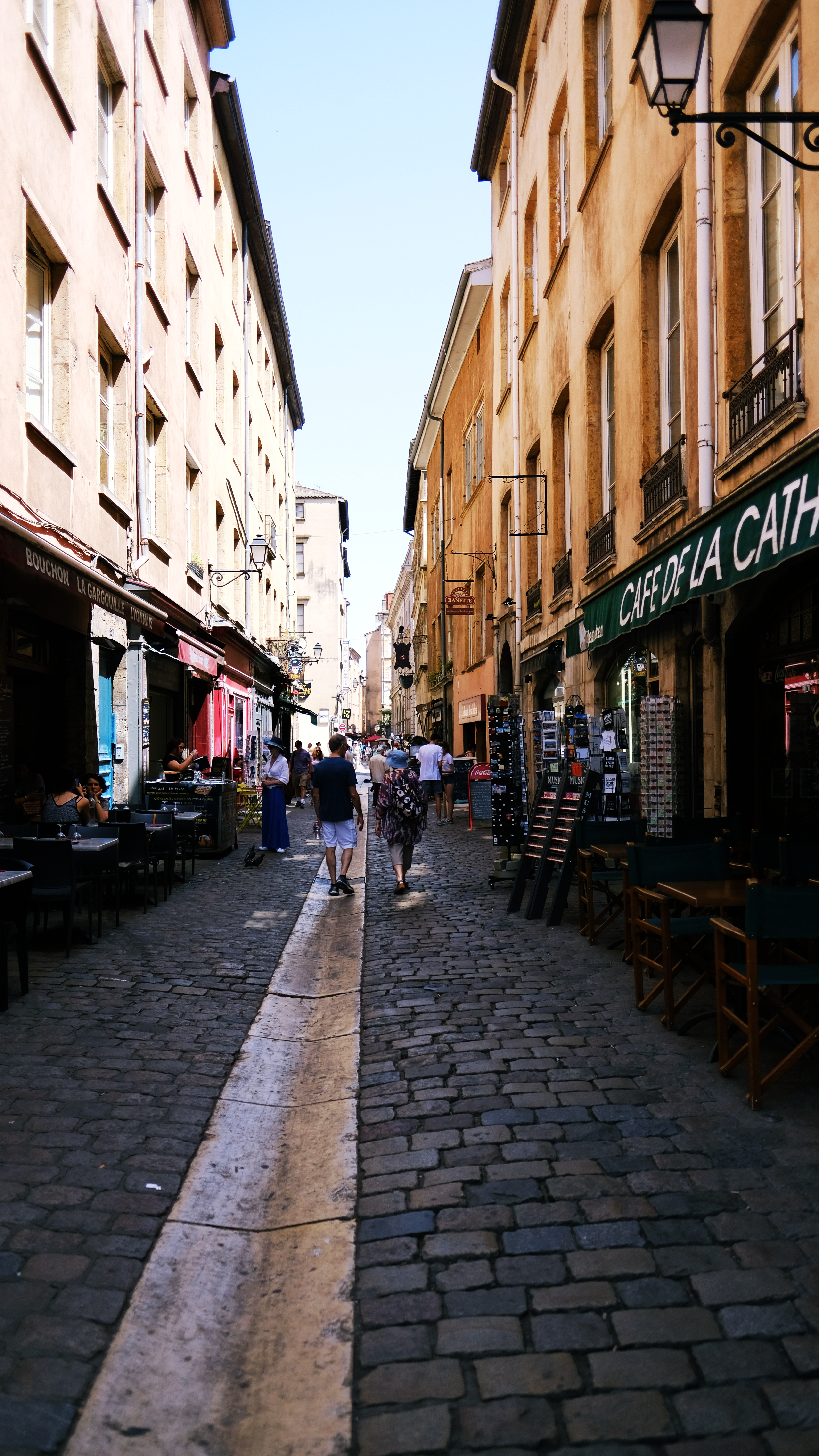
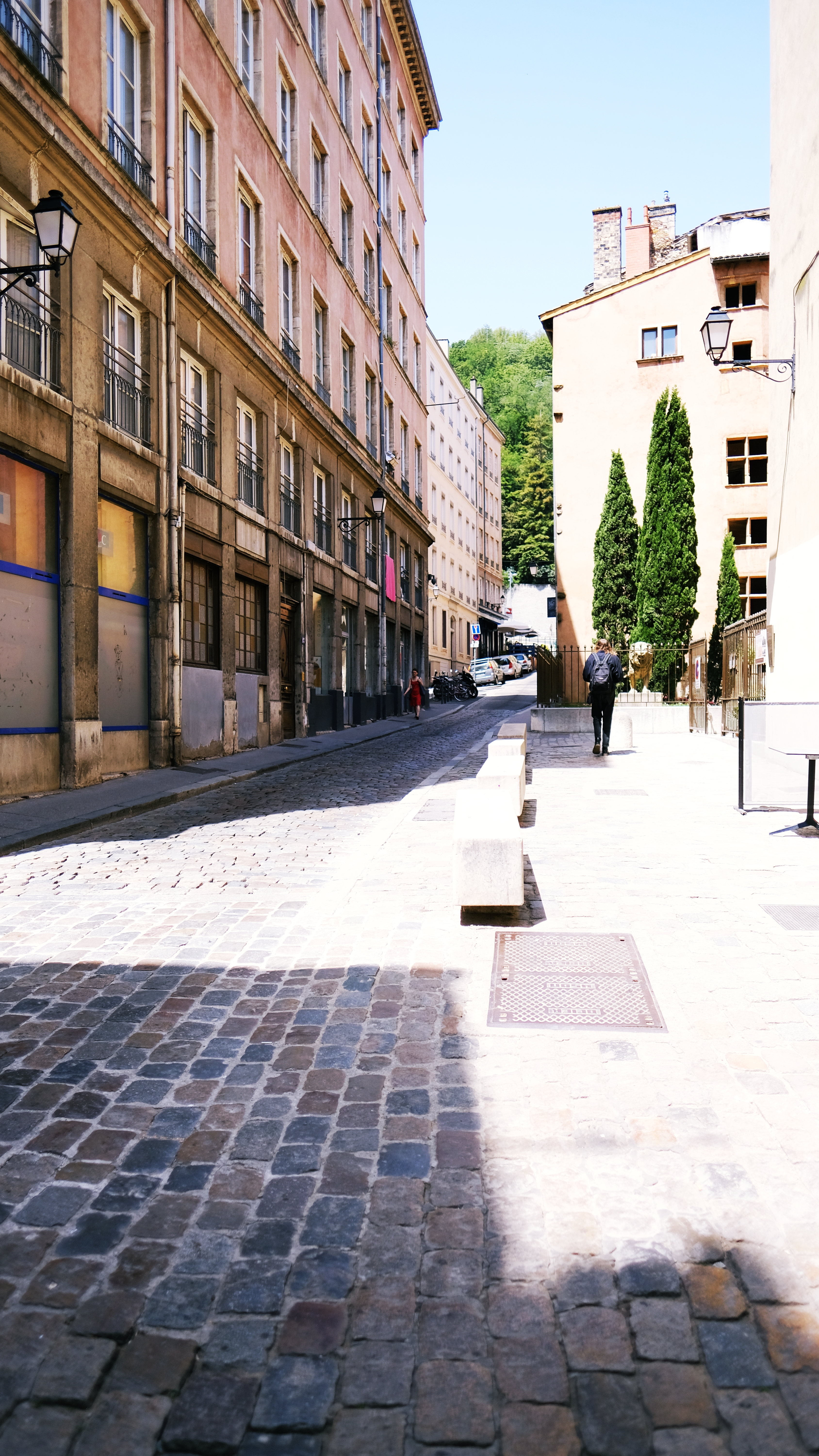
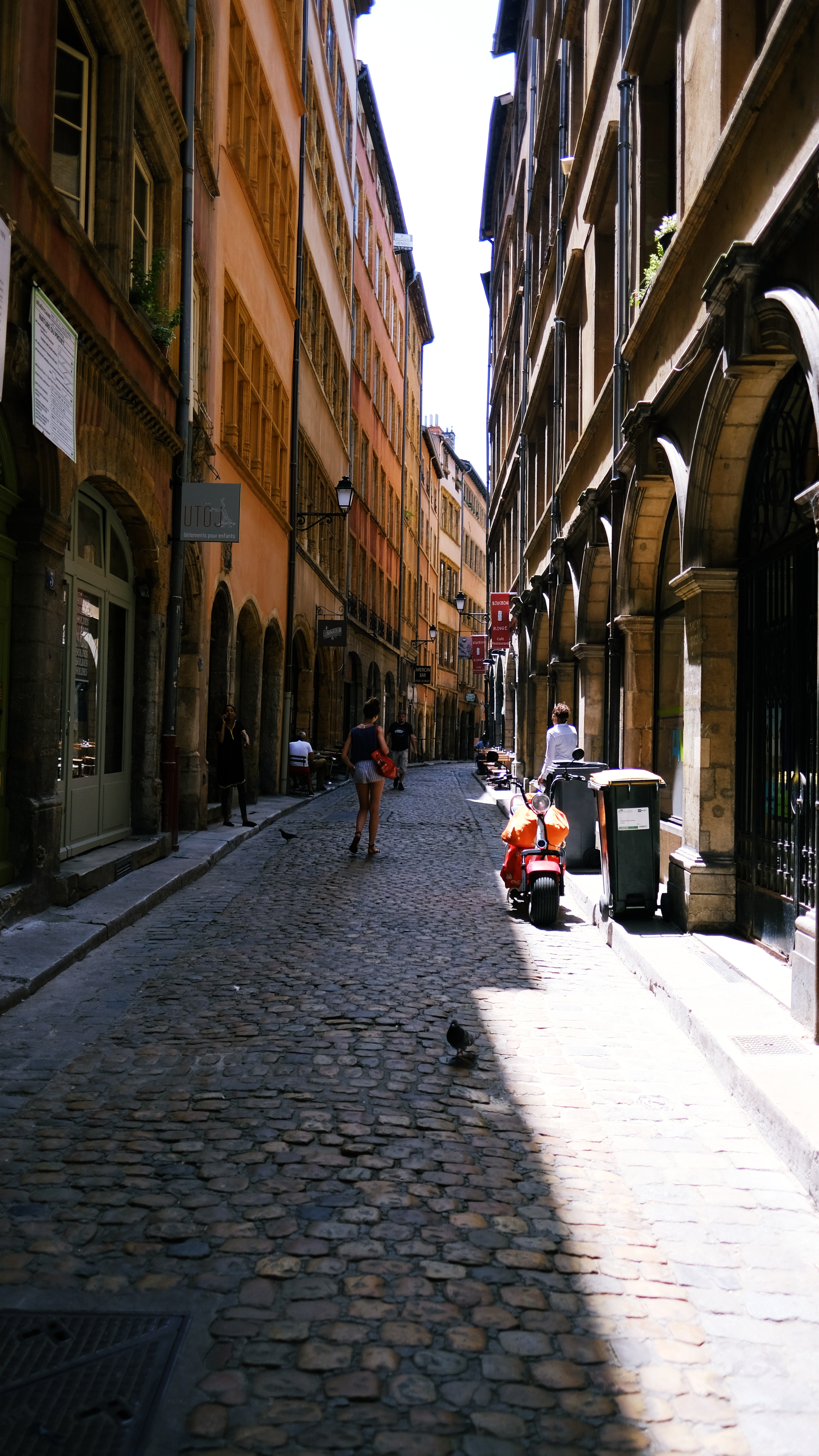
One of my favorite parts about walking around Lyon is feeling like I’m time traveling from one period of settlement to another. At the bottom of the hill on the west of River Saône is the Vieux Lyon “Old Lyon”. Through the country’s protection of cultural sites, the neighborhood transports you back into the city’s Renaissance period with Romanesques buildings and street cobblestones. Hidden passageways and traboules show that this area had many secret stories happening.
Visit the city’s website to learn more about Vieux Lyon, a “secret and mysterious district” that enables you to step back into the Renaissance Middle ages of Lyon.
5. 1st Arrondissement
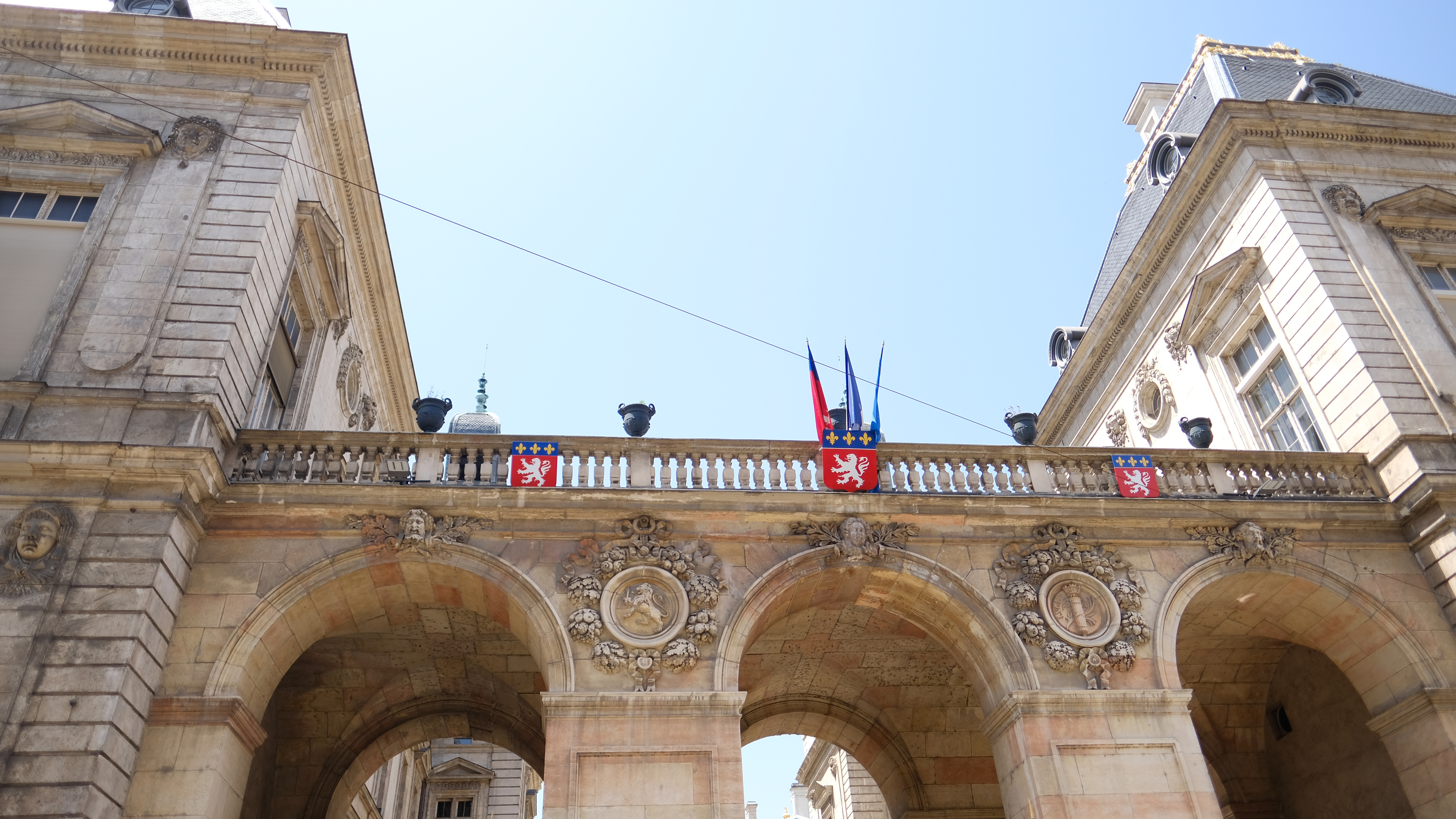
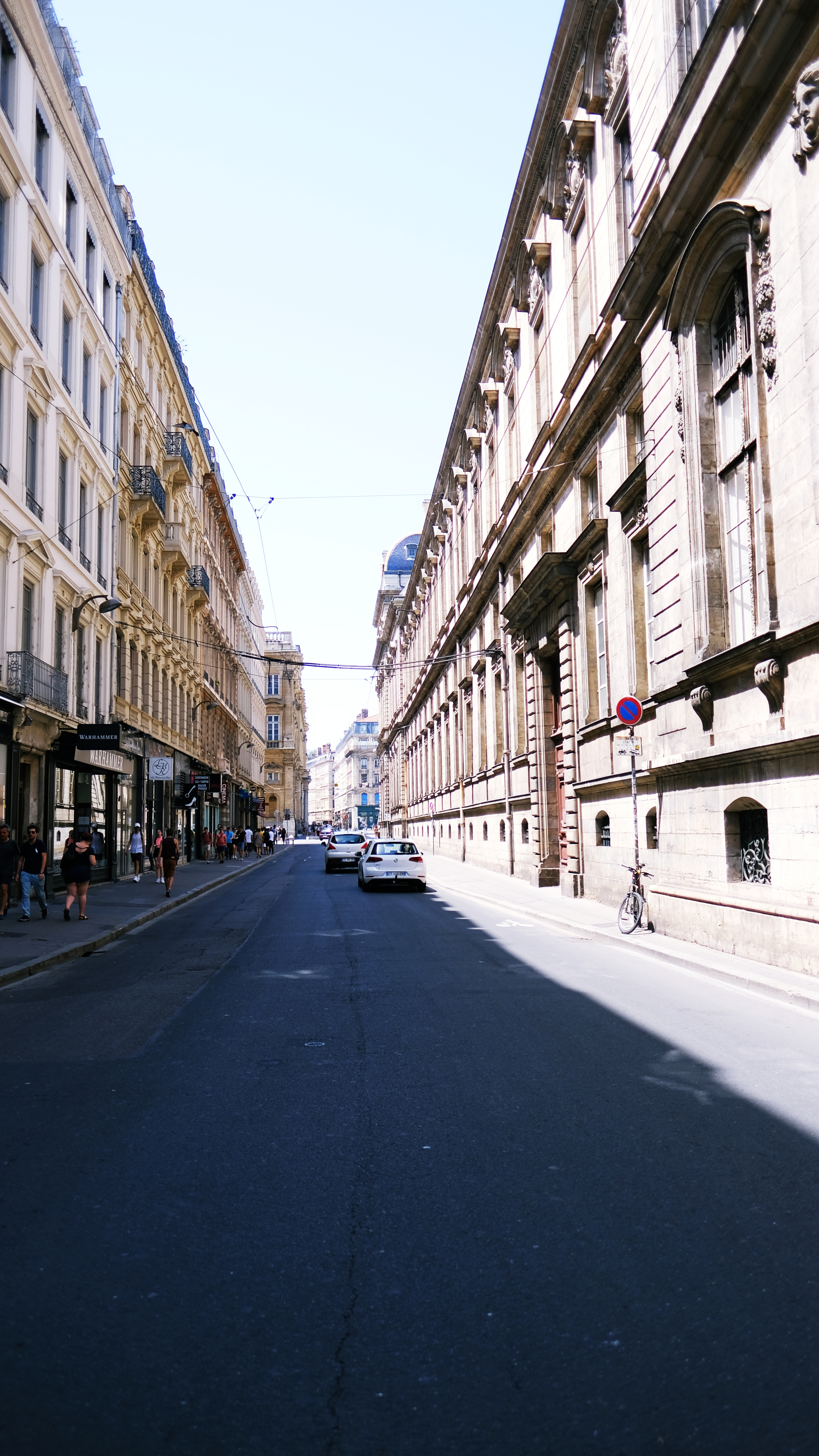
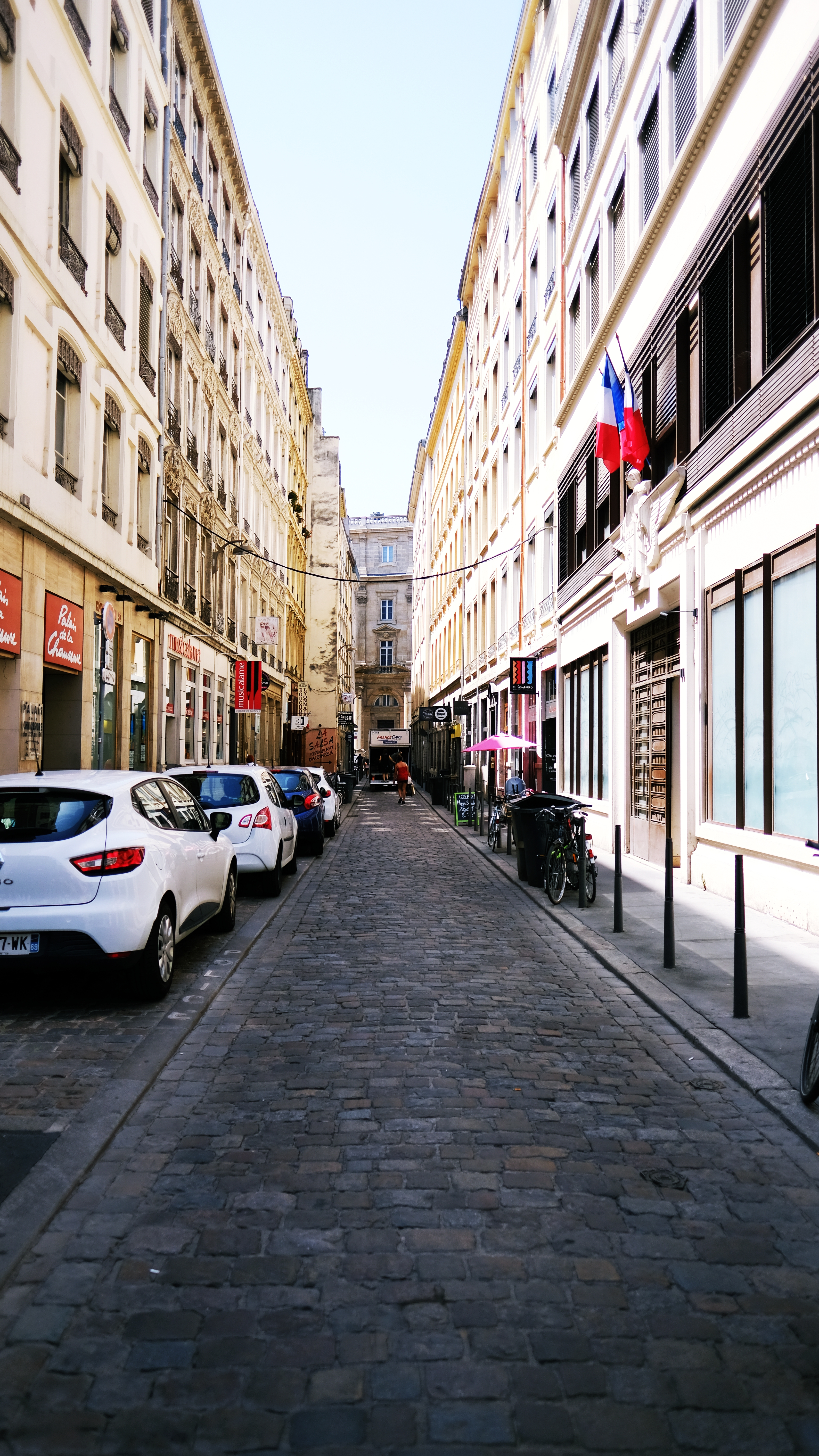
Discover French architecture in Lyon’s 1st Arrondissement which includes the City Hall, popular meeting point – Places des Terreaux, Hôtel de Ville, the Opera House, and Musée des Beaux Arts. The district basically has everything from government offices to housing to shopping, dining, and nightlife. It is also one of the densest neighborhoods due to housing apartments for the “Canut” silk workers. You can discover the lifestyle of the Lyon silk workers in the 19th century and how they transported goods throughout the city by utilizing traboules, also known as covered passageways that link streets.
Lyon Opera House
Architect: Jean nouvel
Location: 1 Place de la Comédie, 69001 Lyon
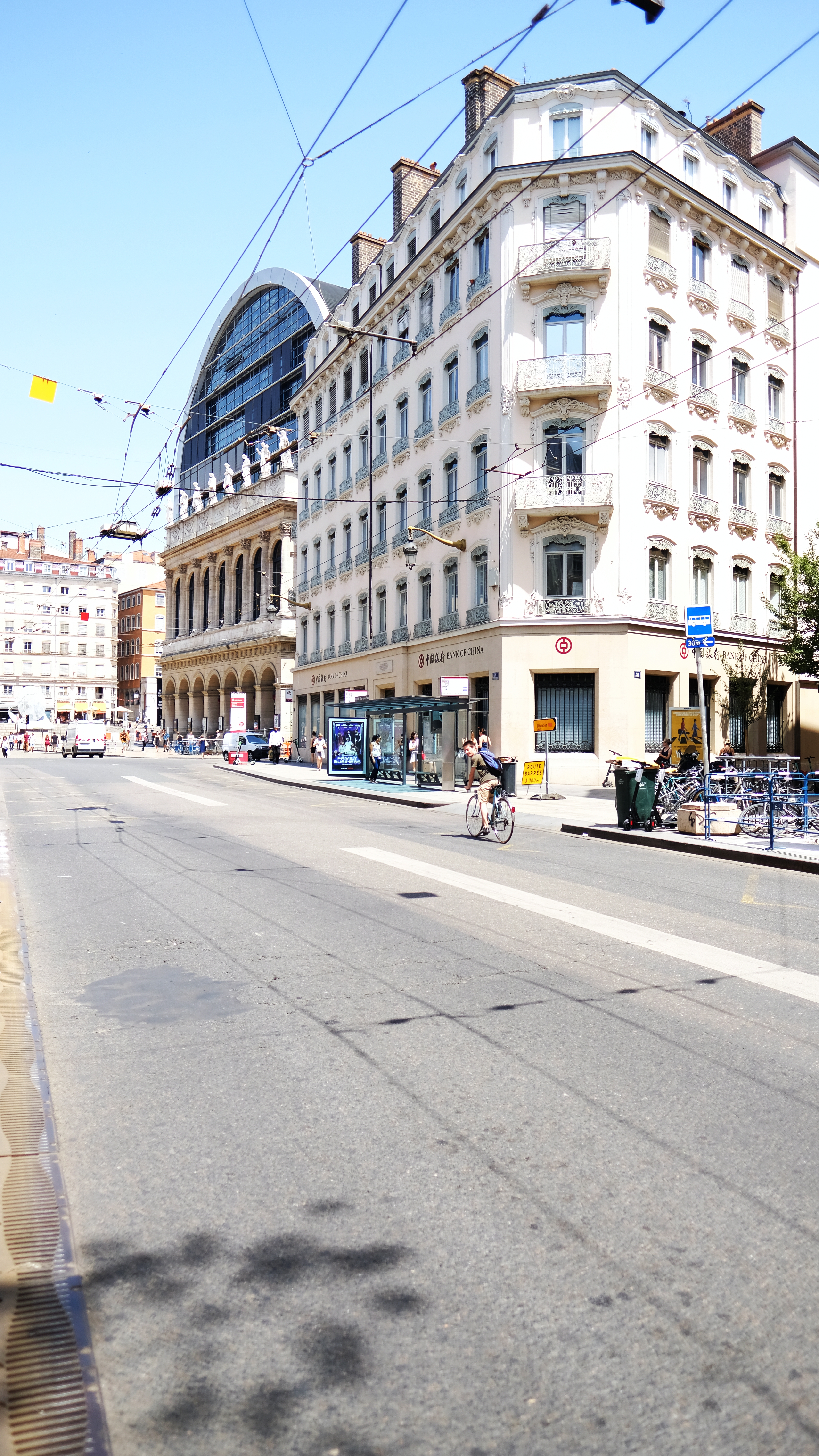
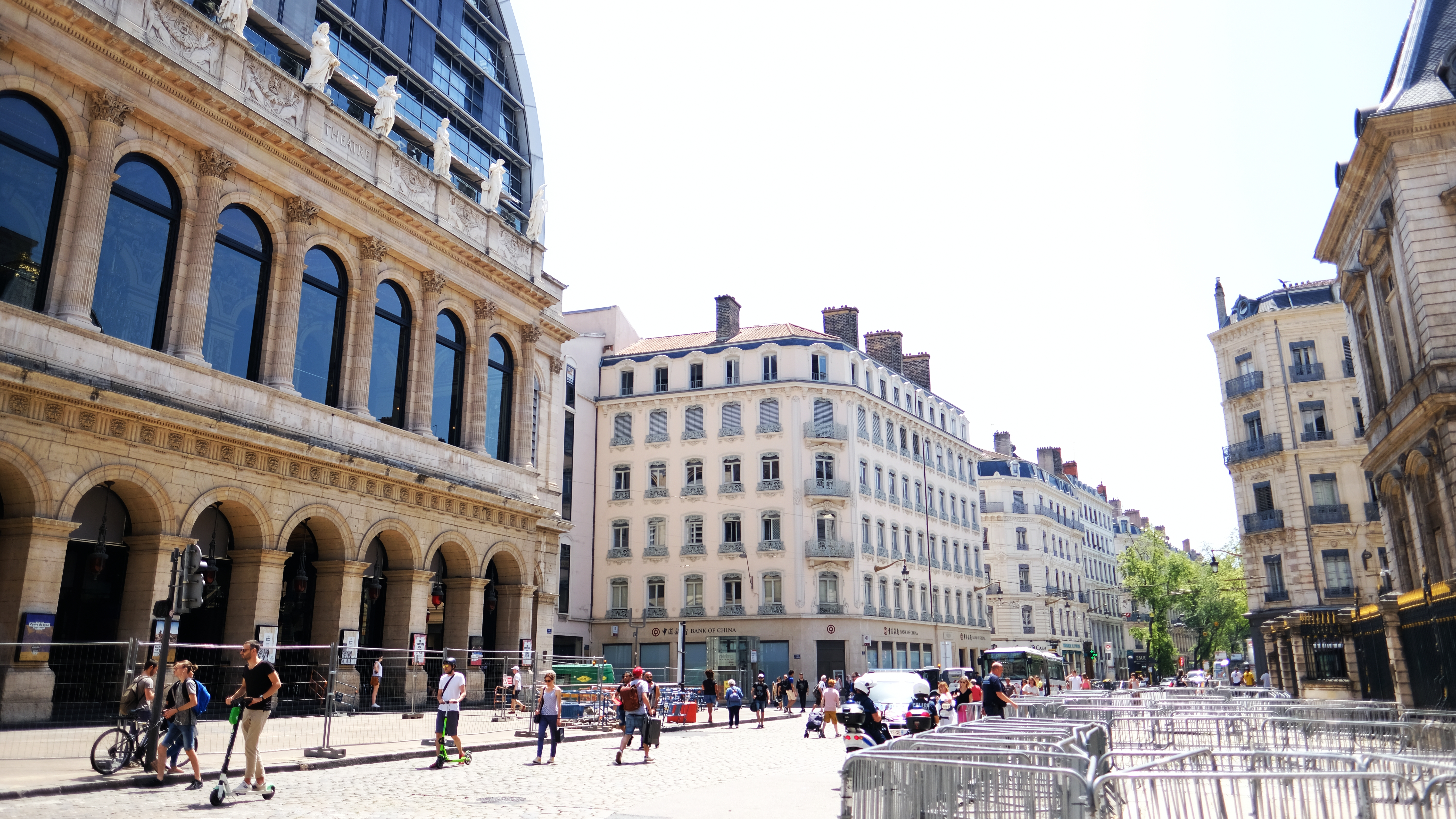
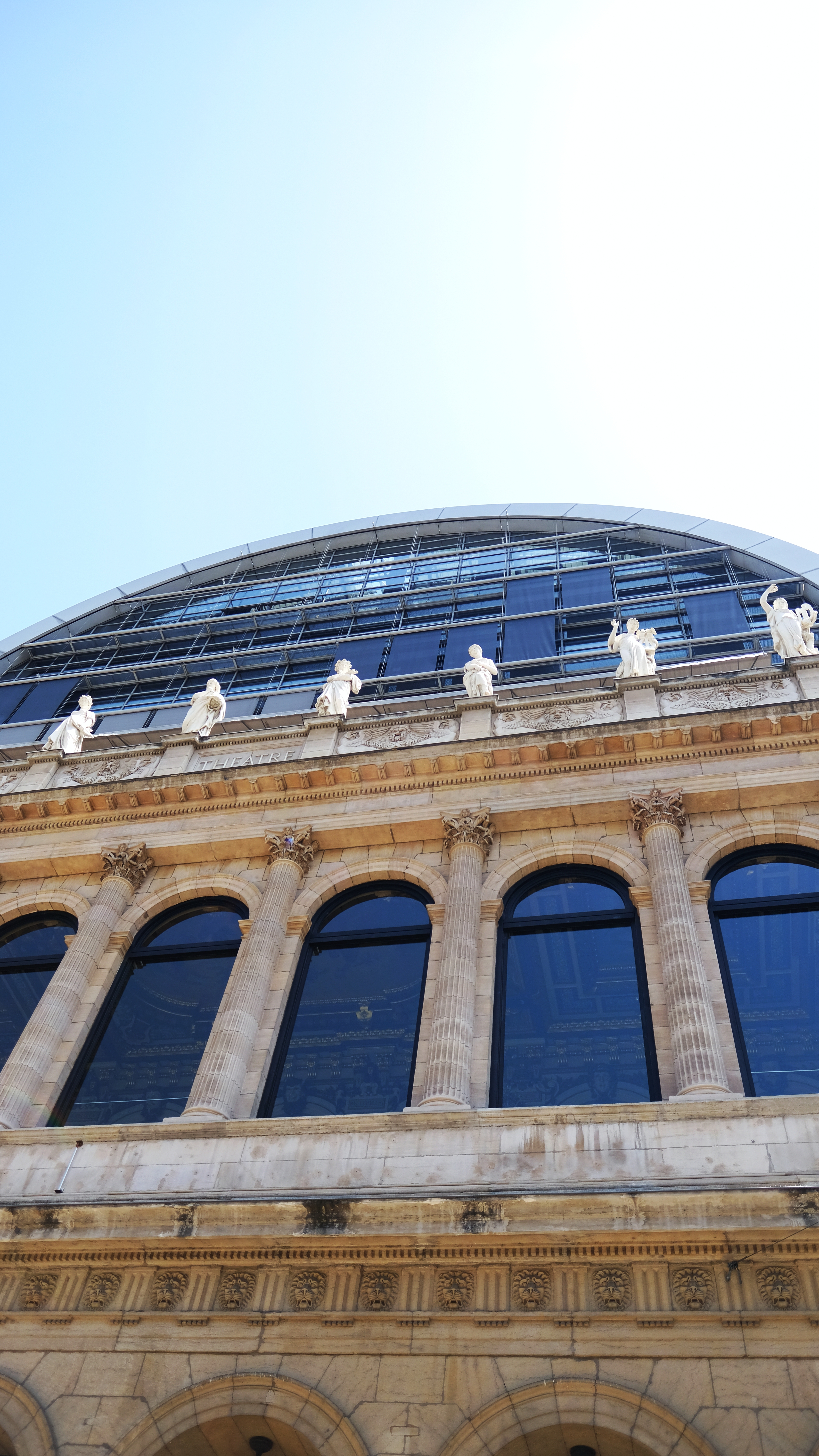
Of course, Lyon has a few projects by the French architect, Jean Nouvel. The semicylindrical glass arch makes the 1st Arrondissement a focal point, using Opéra National de Lyon (aka Lyon Opera House) as a balance to the Credit Lyonnais Towers in Part-Dieu (the Central Business District of Lyon). The goal for the building was to create a new urban symbol to help generate Lyon’s skyline. The semicylindrical form houses the ballet studios for the natural daylight while the theatre is in the original building. Nouvel used only the exterior walls of the existing building to generate the large heights for a theatre.
 Hiraeth